
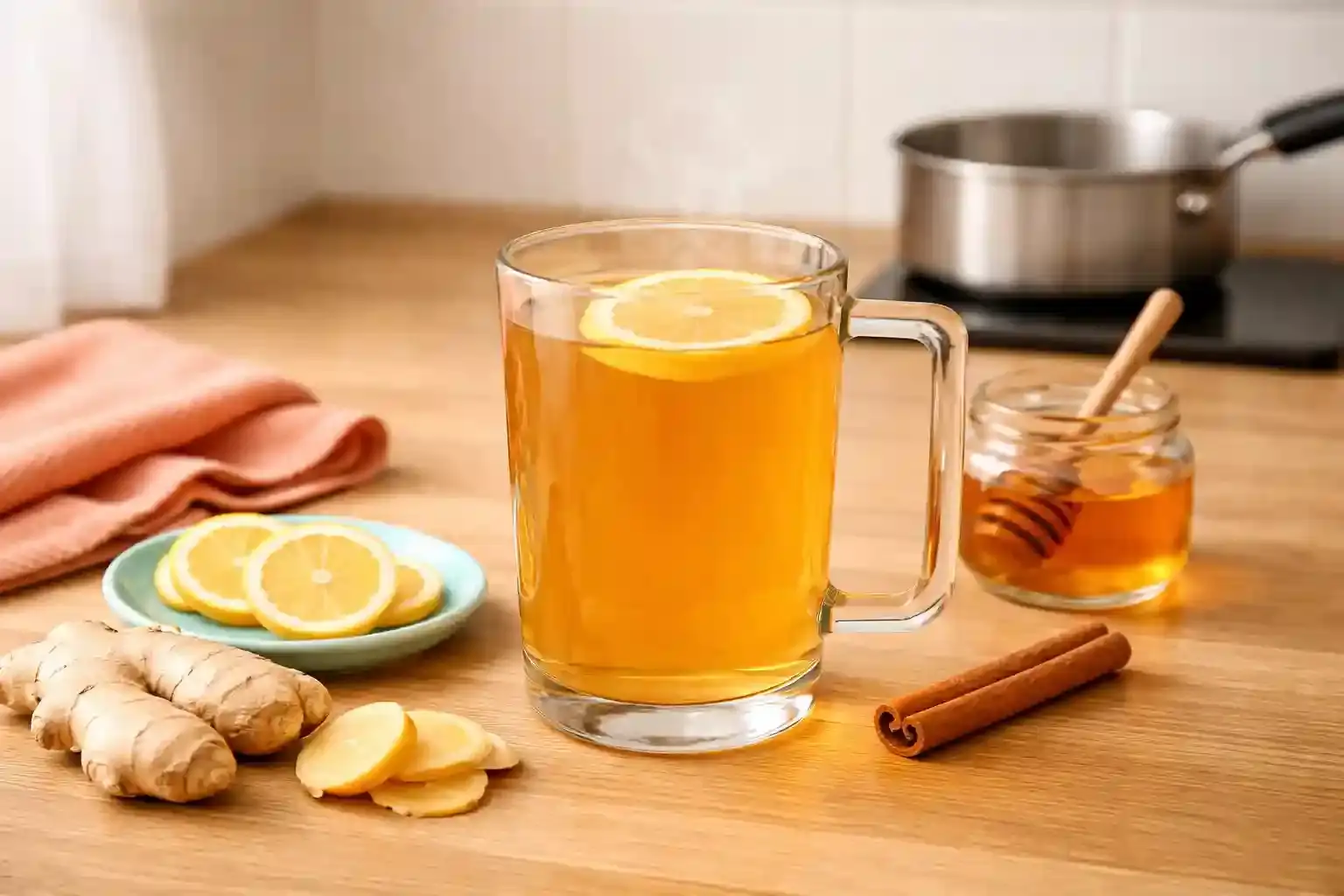
Ginger tea is a simple homemade drink made by simmering fresh sliced ginger in water for about 10 to 15 minutes, then finishing it with lemon and optional honey. It is commonly enjoyed as a warm, caffeine-free drink that may help with digestion and everyday comfort, but it should be presented with realistic expectations rather than strong health claims.
Key Takeaways
- This ginger tea recipe is simple to make, with clear amounts and easy step-by-step instructions.
- The guide also explains the commonly discussed benefits of ginger tea in a balanced, non-medical way.
- You’ll learn when to drink ginger tea, whether it is caffeine-free, and how to adjust it with lemon or honey.
- Flavor tips, variations, and storage advice help make the recipe easier to repeat.
- Important safety notes are included for readers who may be sensitive to ginger or certain add-ins.
Introduction
A good ginger tea recipe should be easy to follow, easy to adjust, and pleasant enough to make again. Beyond the basic method, many readers also want practical guidance on flavor, common add-ins, the best time to drink it, and how to prepare it in a way that fits their routine.
This guide walks through the recipe step by step, then covers simple variations, everyday uses, and a few important safety notes. The goal is to give you a ginger tea recipe that is clear, balanced, and genuinely useful in a home kitchen.
Update Note (2026): We retested and refined this ginger tea recipe for better flavor balance, clearer instructions, and more consistent results.
Why This Ginger Tea Recipe Works
This ginger tea recipe works because it keeps the method simple while giving the ginger enough time to infuse the water properly. Simmering the sliced ginger for 10 to 15 minutes helps create a tea that tastes warming and flavorful without becoming unnecessarily complicated. As it simmers, the ginger should smell warm and fragrant rather than harsh, which is usually a good sign that the flavor will stay balanced.
It also uses familiar add-ins that many readers already expect, including lemon for brightness and optional honey for a softer finish. The cinnamon is optional, which makes the recipe flexible, and the final method is easy to adjust depending on whether you prefer your ginger tea lighter, stronger, sweeter, or more citrus-forward.
What Ginger Tea Is and Why People Commonly Drink It
Ginger tea is a warm herbal-style drink made by steeping or simmering fresh ginger in water. Even though it is commonly called a tea, it does not contain tea leaves unless you add them separately, so the basic version is naturally caffeine-free.
For general guidance on caffeine in tea-based drinks, see Spilling the Beans: How Much Caffeine Is Too Much? (FDA).
Many people drink ginger tea because it feels warming, simple, and soothing. It is often enjoyed as part of a morning routine, after meals, during colder weather, or whenever someone wants a light homemade drink with a stronger flavor than plain hot water. It is also commonly associated with digestive comfort, which is one reason it appears so often in everyday wellness routines.
Ingredients You Need
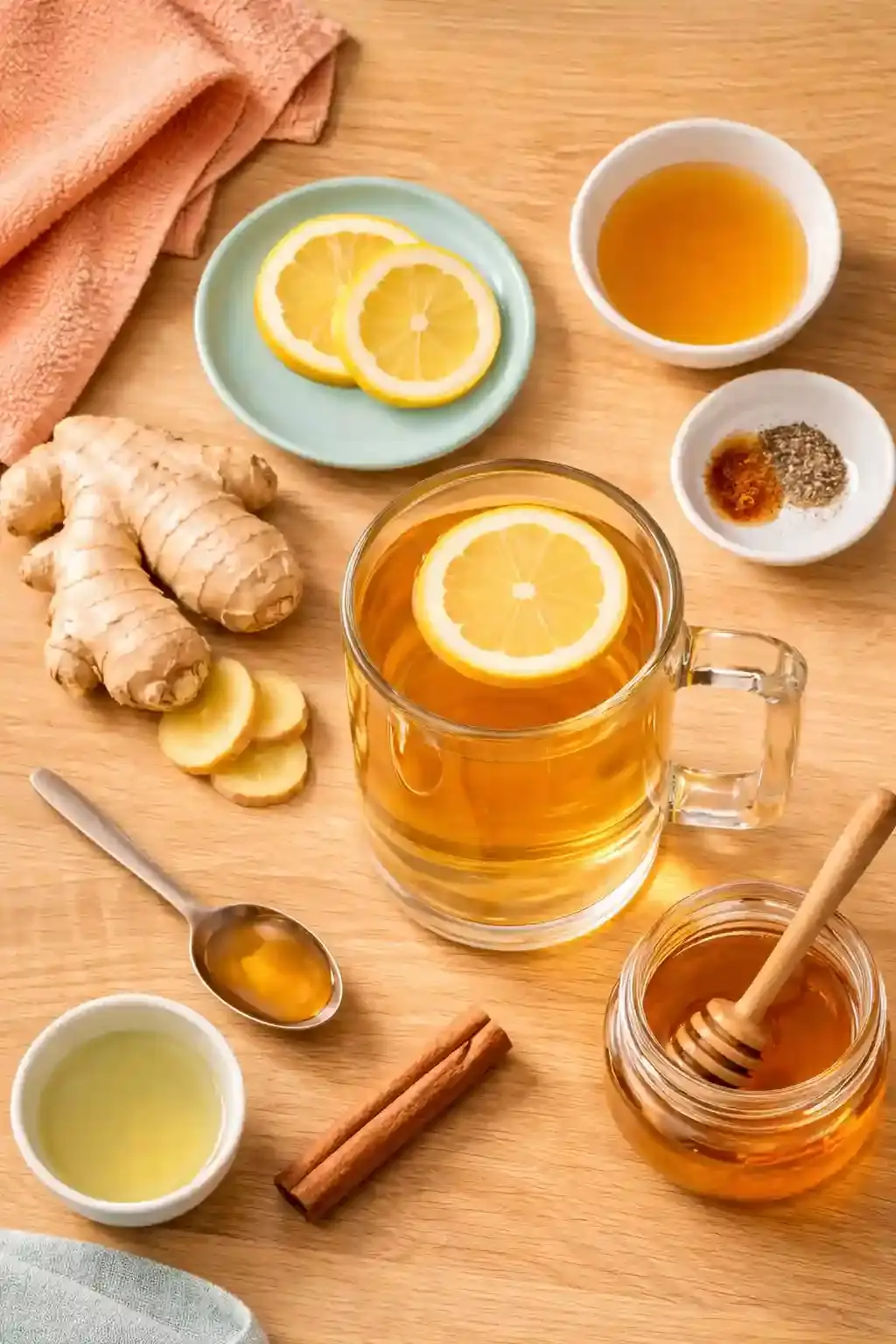
This ginger tea recipe uses a short list of simple ingredients, with a few optional add-ins if you want a stronger or slightly more customized cup.
Main ingredients
| Ingredient | Amount | Notes |
|---|---|---|
| Filtered water | 2½ cups (600 ml) | Use as the base for the tea. |
| Fresh ginger root | 1½-inch (4 cm) piece, thinly sliced | No need to peel if clean and smooth. |
| Lemon slices | 2 thin slices, plus extra for serving | Adds brightness and a fresh citrus note. |
| Cinnamon stick or ground cinnamon | 1 small stick or ¼ tsp | Optional, for a warmer flavor. |
| Raw honey or liquid stevia | 1 tsp honey or 1–2 drops stevia | Optional, for sweetness. |
Optional add-ins
| Add-In | Amount | Notes |
|---|---|---|
| Raw apple cider vinegar | 1 tsp | Add off heat while the tea is still warm. |
| Cayenne or black pepper | Small pinch | Add for extra warmth and a slightly bolder finish. |
Fresh ginger is the key ingredient here, since it gives the tea its bold, warming flavor. Lemon adds brightness, while honey can soften the sharpness of the ginger. The optional add-ins are best treated as personal preference rather than required parts of the recipe. Thin slices usually work better than thick pieces because they release flavor more evenly during simmering.
How Do You Make Ginger Tea?
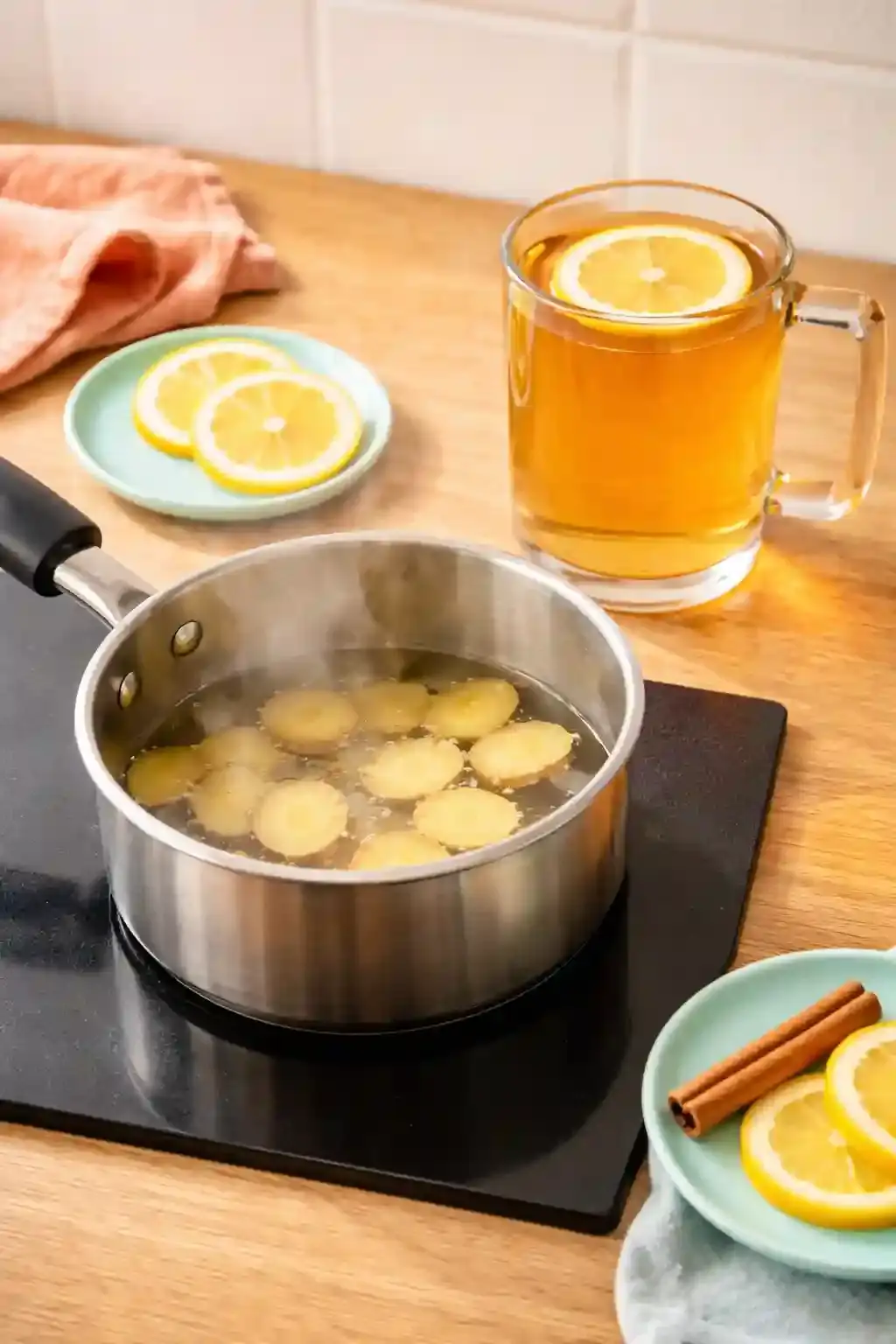
Making ginger tea at home is straightforward and does not require special equipment. The key is to give the ginger enough time to simmer so the water takes on its flavor without becoming too harsh.
1. Prepare the ginger
Rinse the ginger root well, then slice it thinly. If the skin is clean and smooth, you can leave it on.
2. Simmer the base
Add the water, sliced ginger, and cinnamon to a small saucepan. Bring to a boil over medium heat, then reduce the heat and let it simmer gently for 10 to 15 minutes.
3. Add the lemon
Turn off the heat, add the lemon slices, cover the saucepan, and let the tea steep for 5 minutes.
4. Finish the tea
Strain into mugs. Stir in the apple cider vinegar while the tea is warm, not boiling, if using. Add honey or stevia to taste.
5. Serve
Garnish with a fresh lemon slice and serve hot.
For a stronger tea, simmer the ginger a little longer or use slightly more ginger. For a lighter cup, reduce the simmering time or add a little more water. Avoid boiling the tea too aggressively for too long, since that can make the ginger taste harsher instead of clean and warming.
When Should You Drink Ginger Tea?
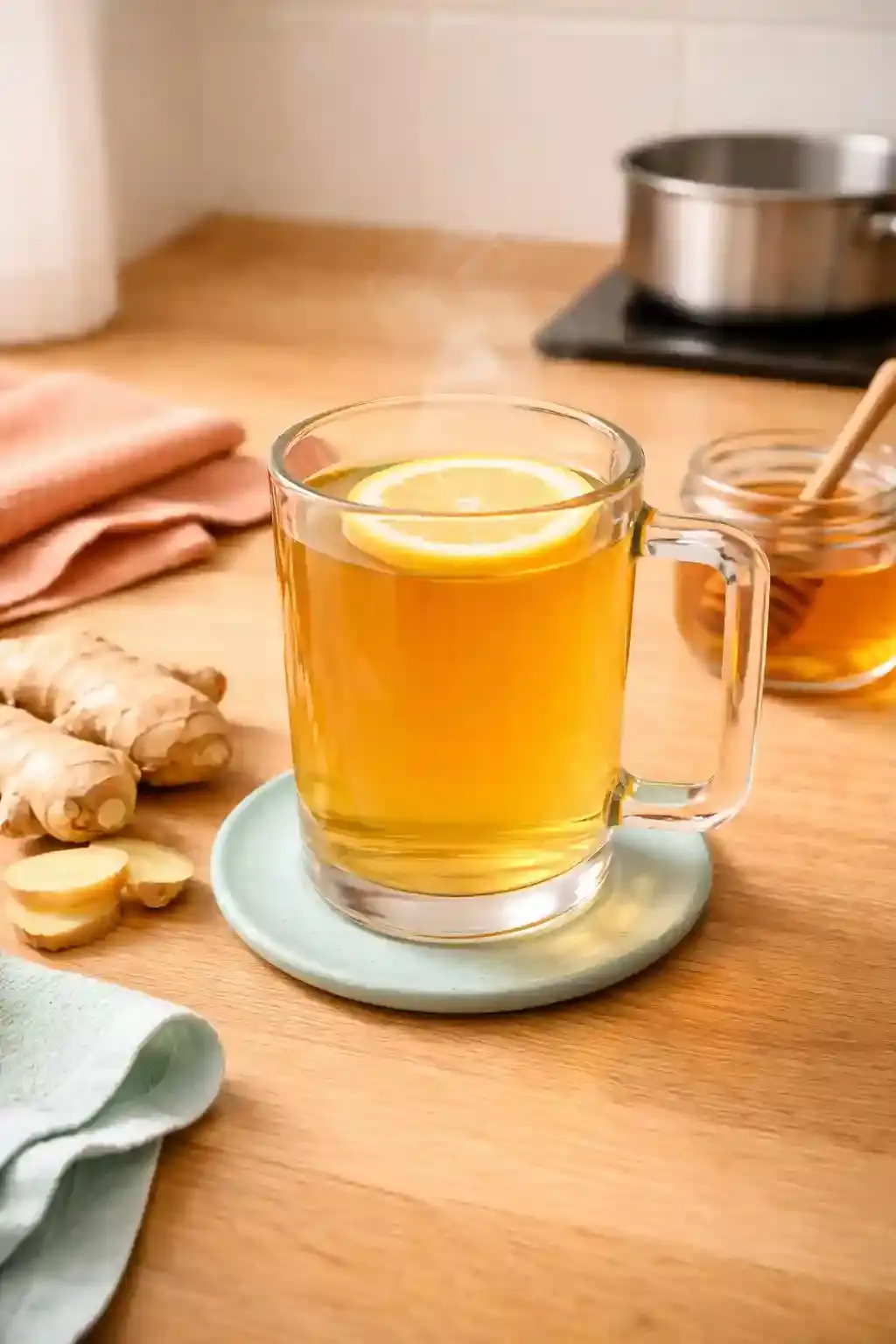
Ginger tea can fit into different parts of the day depending on why you are making it and how strong you like the flavor. Many people prefer it in the morning as a warm caffeine-free drink, while others enjoy it later in the day when they want something light and soothing.
It is also commonly served after meals because ginger is often associated with digestive comfort. Some people like to drink a cup 20 to 30 minutes before a meal as part of a simple routine, especially when they want something warm and not overly heavy. If you are sensitive to strong flavors, it may be better to start with a lighter brew and see what feels most comfortable.
Ginger Tea Benefits in Everyday Context
Ginger tea is often appreciated not just for its flavor, but also for the role it can play in a simple daily routine. While it should not be described as a cure or a guaranteed weight-loss drink, it is commonly enjoyed for a few practical reasons that make sense in an everyday kitchen context.
One of the most common reasons people drink ginger tea is for digestive comfort. A warm cup after a meal can feel light, soothing, and easier to include in a daily routine than heavier drinks. Ginger tea is also naturally caffeine-free in its basic form, which makes it a useful option for readers who want a warm drink later in the day without added stimulants.
Many people also like ginger tea because it feels warming and refreshing at the same time, especially when lemon is added. That combination can make it appealing during colder weather, in the morning, or whenever you want a homemade drink that feels a little more lively than plain hot water. For some readers, replacing sweeter beverages with an unsweetened or lightly sweetened ginger tea may also support a more balanced routine overall.
The most important point is to keep expectations realistic. Ginger tea can be a helpful part of a simple lifestyle routine, but its benefits are best understood as supportive and everyday in nature rather than dramatic or medical.
For a research-based overview of ginger’s commonly discussed uses and limits, see Ginger: Usefulness and Safety (NCCIH).
Tips for the Best Flavor Balance
The best ginger tea is not only about simmering time. It also depends on how sharp, bright, sweet, or warming you want the final cup to taste. A few small adjustments can make the recipe much more pleasant and easier to repeat. For a mild cup, simmer for about 10 minutes; for a more standard flavor, aim for 12 to 15 minutes; for a stronger tea, use a little extra ginger or extend the simmer slightly.
If the tea tastes too strong, use a little less ginger next time or shorten the simmering time slightly. If it tastes too mild, add a few extra slices of ginger or let it simmer a bit longer before steeping with the lemon. Thin slices usually work better than thick chunks because they release flavor more evenly.
Lemon helps lift the tea and makes the flavor feel fresher, but too much can overpower the ginger. Start with a small amount, then adjust in future batches if you prefer a brighter cup. Sweeteners should also be used lightly, since too much honey or stevia can flatten the clean, warming taste that makes ginger tea appealing in the first place.
If you add cinnamon, cayenne, or apple cider vinegar, think of them as accents rather than the main flavor. A little is usually enough. The goal is to keep the ginger noticeable while building a cup that feels balanced, smooth, and comfortable to drink.
Variations and Substitutions
This ginger tea recipe is easy to adjust based on your taste and what you have on hand. For a stronger flavor, use a little more fresh ginger or simmer it slightly longer. For a milder cup, use less ginger or shorten the simmering time. If you do not have fresh ginger, use about ¼ teaspoon of ground ginger for a lighter substitute, knowing the flavor will be less bright and fresh.
You can also change the sweetness to suit your preference. Honey gives the tea a softer finish, while stevia keeps it lighter. If you prefer a cleaner flavor, you can skip the sweetener entirely.
Cinnamon is optional and adds extra warmth, but it can be left out for a more straightforward ginger taste. Apple cider vinegar and cayenne are also optional and should be used lightly, since they can quickly change the balance of the drink.
Lemon, Honey, and Other Add-Ins
Lemon and honey are the most common add-ins because they make ginger tea easier to adjust without changing the basic recipe. A little lemon adds brightness and freshness, while honey softens the sharper edge of the ginger.
For a cleaner, more citrus-forward cup, add extra lemon after steeping rather than during the simmer. To create a smoother finish, stir in a small amount of honey once the tea is warm enough to drink. Stevia can also work well when you want sweetness without sugar.
Other add-ins, such as cinnamon, apple cider vinegar, or a small pinch of cayenne, are best used lightly. They can add warmth or depth, but too much can overpower the ginger and make the tea less balanced.
Storage and Reheating Tips
Ginger tea is best enjoyed fresh, but you can make a batch ahead if needed. Let it cool, then store it in a covered jar or container in the refrigerator for up to 2 days. Freezing is possible, but the flavor is usually best when the tea is made fresh or stored in the refrigerator for short-term use.
To reheat, warm it gently on the stove or in the microwave until hot but not boiling. For the cleanest flavor, add honey, apple cider vinegar, or extra lemon after reheating.
Should the tea taste too strong after chilling, add a small splash of hot water before serving. For a bolder next batch, let it simmer a little longer.
Safety Notes
Ginger tea is generally a simple homemade drink, but it may not suit everyone in the same way. Because ginger has a strong flavor and can feel intense for some people, it is usually best to start with a mild cup and adjust from there.
Readers who are sensitive to spicy foods, acidic ingredients, or strong herbal drinks may prefer less ginger, less lemon, or no optional add-ins like cayenne or apple cider vinegar. It is also sensible to avoid describing ginger tea as a medical treatment or a guaranteed weight-loss solution.
If you have dietary restrictions, medication concerns, or a health condition that affects what you drink regularly, use extra care with concentrated versions and optional add-ins. In general, moderation and a balanced routine make more sense than overusing any single drink.
For broader guidance on how supplements and herbs may interact with medications, see How Medications and Supplements Can Interact (NCCIH).
Ginger Tea Recipe

This easy ginger tea recipe is made with fresh ginger, lemon, and optional honey for a warm, balanced drink. It is a simple homemade tea often enjoyed for its soothing flavor and everyday digestive comfort.
- Prep Time: 5 minutes
- Cook Time: 15 minutes
- Total Time: 20 minutes
- Yield: 2 mugs 1x
- Category: Drinks
- Method: Simmered
- Cuisine: Global
- Diet: Low Calorie
Ingredients
- 2½ cups (600 ml) filtered water
- 1½-inch (4 cm) piece fresh ginger root (about 15–20 g), thinly sliced
- 2 thin lemon slices, plus extra for serving
- 1 small cinnamon stick or ¼ tsp ground cinnamon (optional)
- 1 tsp raw honey or 1–2 drops liquid stevia (optional)
Optional Add-Ins:
- 1 tsp raw apple cider vinegar (added off heat)
- A small pinch of cayenne or black pepper
Instructions
- Prepare the ginger: Rinse the root well and slice it into thin pieces. Keep the peel on if it is smooth and clean.
- Simmer the base: Add water, sliced ginger, and cinnamon to a small saucepan. Bring to a boil over medium heat (about 100°C / 212°F). Once boiling, lower the heat and simmer gently for 10 to 15 minutes.
- Add lemon: Turn off the heat and add the lemon slices. Cover and let it steep for 5 minutes to release the citrus oils.
- Sweeten and finish: Strain the tea into mugs. Stir in apple cider vinegar while warm, not boiling, if using. Add honey or stevia if desired.
- Serve: Garnish with a fresh lemon slice and serve hot.
Notes
- Flavor strength: Steep for 10 minutes for a milder tea or up to 15 minutes for a stronger ginger flavor.
- Make it iced: Cool completely, then pour over ice for a chilled version.
- Storage: Store leftovers in a sealed jar in the refrigerator for up to 2 days.
- Substitutions: Use lime instead of lemon, or skip the sweetener for a cleaner flavor.
- Safety: If you are sensitive to ginger or use medication that affects diet choices, keep portions moderate and use add-ins with care.
Nutrition
- Serving Size: 1 mug
- Calories: 8 kcal
- Sugar: 1 g
- Sodium: 5 mg
- Fat: 0 g
- Saturated Fat: 0 g
- Unsaturated Fat: 0 g
- Trans Fat: 0 g
- Carbohydrates: 2 g
- Fiber: 0 g
- Protein: 0 g
- Cholesterol: 0 mg
FAQ: Common Questions About Ginger Tea
Ginger tea is commonly enjoyed as a warm, caffeine-free drink that may support everyday comfort, especially after meals or during colder weather. Its role is best understood as part of a balanced routine, not as a medical remedy.
No. Plain ginger tea made with fresh ginger and water is naturally caffeine-free. It only contains caffeine if you add tea leaves or another caffeinated ingredient.
That depends on your routine. Many people drink it in the morning, after meals, or later in the day when they want a warm drink without caffeine.
Yes. Lemon adds brightness, and honey softens the stronger taste of ginger. Both are common additions and can be adjusted based on preference.
Ginger tea should not be presented as a guaranteed weight-loss drink. It may fit into a lighter routine, especially when replacing sweeter drinks, but the benefits should be kept realistic.
Explore More Recipes and Wellness Guides
For more ideas in the same cluster, explore the Weight Loss Drinks Guide for a broader overview of homemade drink options. If you want another light herbal-style recipe, see Lemon Balm Recipe for Weight Loss. For a fruit-based option with a different flavor profile, try Mango Turmeric Smoothie.
If you also enjoy warmer or more unusual drinks, you can browse Banana Bread Latte Recipe or Filthy Kimchi Martini. And because this article mentions weight-loss expectations, it is also worth reading Plastic Wrap Diet Medical Warning and Proven Health Risks for a more explicit safety-focused perspective.
Conclusion
Ginger tea recipe is easy to make, easy to adjust, and simple enough to fit into an everyday routine. With fresh ginger, water, lemon, and optional add-ins, you can make a cup that feels warming, balanced, and practical without overcomplicating the process.
The benefits of ginger tea are best kept in realistic context. It can be a pleasant homemade drink that supports a lighter routine, especially when prepared with moderate expectations and a flavor balance that suits your taste.

