
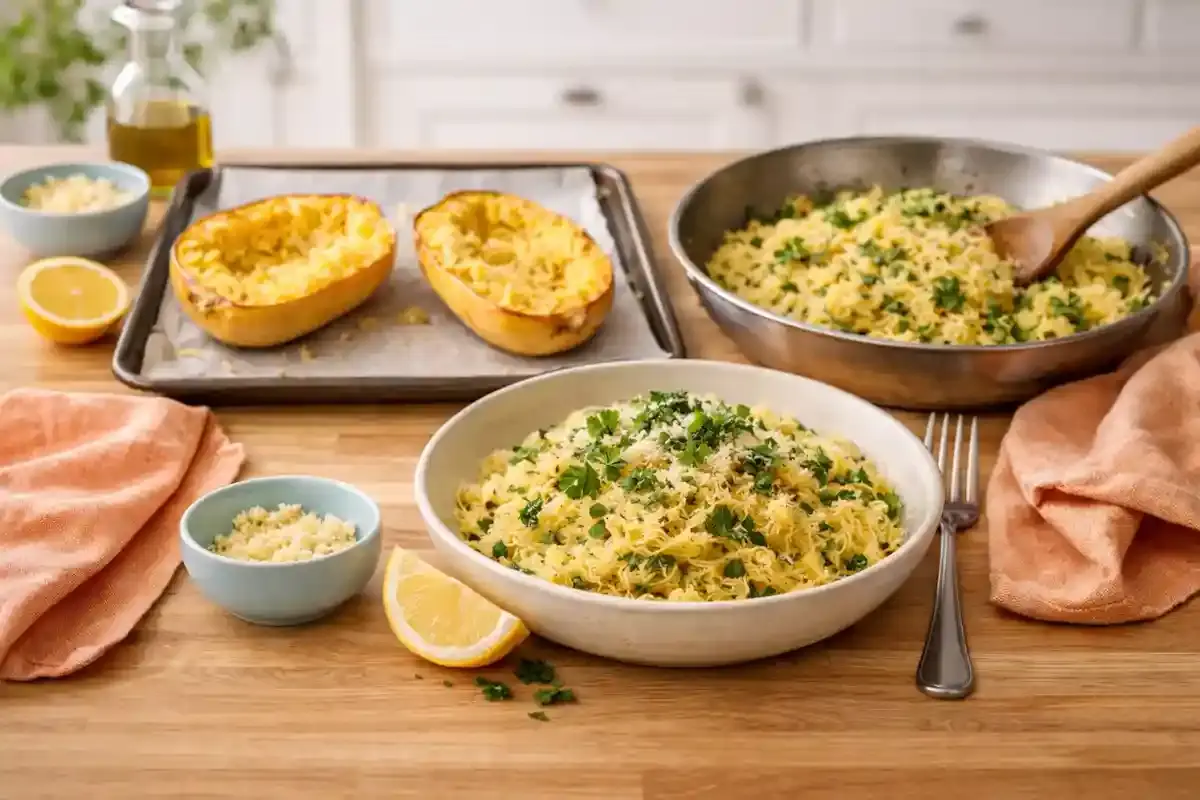
This spaghetti squash recipe shows you how to roast spaghetti squash so it turns tender, lightly caramelized, and easy to scrape into spaghetti-like strands. It uses garlic, lemon, herbs, and optional Parmesan for a light pasta alternative, while also covering texture tips, microwave prep, and sauce pairing ideas.
Key Takeaways
- Roasting at 400°F is the main method for the best flavor and a less watery texture.
- Cutting and roasting technique affects whether the strands stay long or turn soft and short.
- Garlic, lemon, herbs, and a small amount of cheese keep the recipe light but satisfying.
- Simple sauces like palomino, bang bang, or tram sauce can turn it into a fuller meal.
Introduction
Spaghetti squash can be a practical choice when you want a vegetable-based dish that still feels structured and satisfying on the plate. Its mild flavor makes it easy to dress up with simple ingredients, and it works well as either a lighter side dish or the base of an easy dinner.
In this version, the focus is on keeping the method clear and repeatable so the squash cooks evenly and stays pleasant to eat. You will also find guidance on texture, serving ideas, and a few smart adjustments that help you adapt the recipe without making it complicated.
Why this spaghetti squash recipe works
This recipe keeps the ingredient list focused, so the natural flavor of the squash stays at the center instead of getting buried under heavy toppings. Olive oil, garlic, lemon, and herbs add enough flavor to make the dish feel complete while still keeping it flexible for different meals.
It also uses a method that fits the page’s main goal: helping readers make spaghetti squash that is easy to use as a pasta-style base. The roasting step develops a better surface texture than steaming or boiling, and the quick toss in the pan helps distribute seasoning more evenly without making the strands greasy.
Another reason this recipe works well is that it leaves room for adjustment. You can keep it very simple for a light side dish, add Parmesan for a more savory finish, or pair it with a sauce and protein to turn it into a more filling dinner.
Ingredients you need
This recipe uses a short list of everyday ingredients that keep the flavor fresh, savory, and easy to build on.
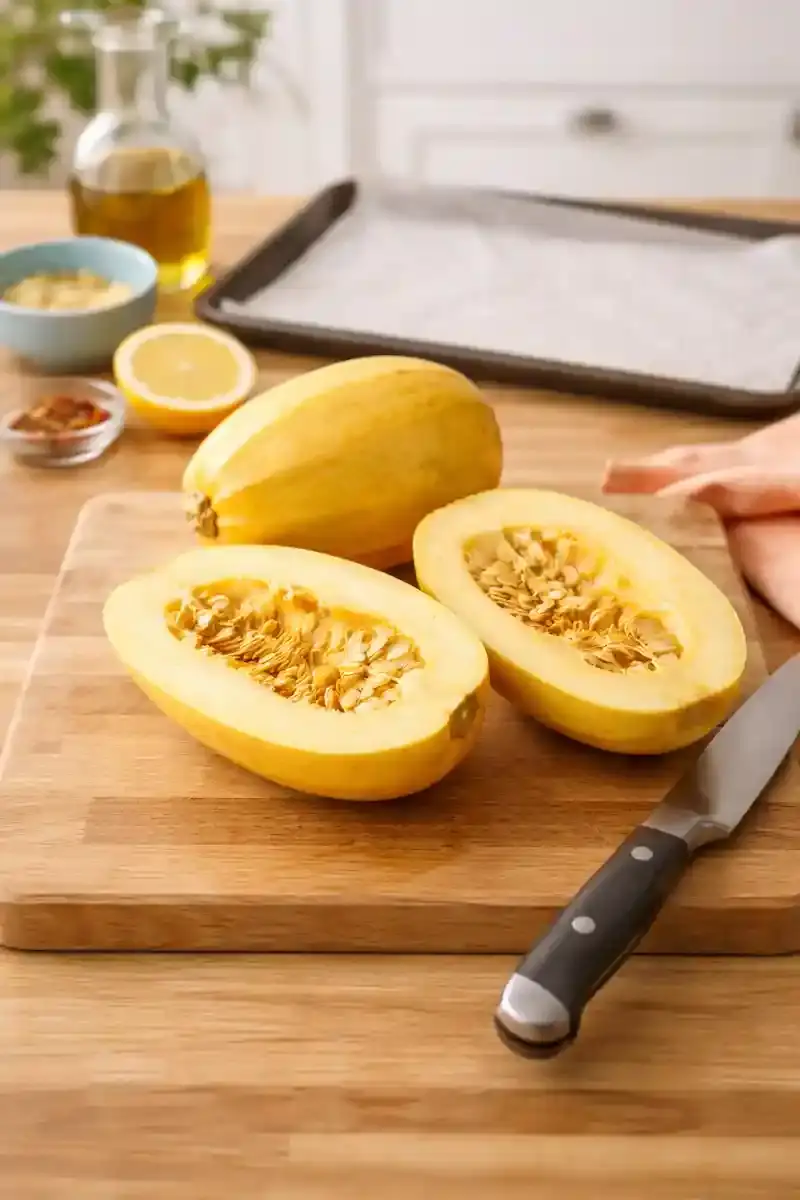
- 1 medium spaghetti squash: the base of the recipe and the source of the signature strands
- 1 tablespoon olive oil: helps with roasting and adds a smooth finish; you can use 1 to 2 teaspoons for a lighter version
- 2 garlic cloves, minced: adds depth and aroma without overpowering the squash
- ½ teaspoon salt: helps bring out the mild flavor
- ¼ teaspoon black pepper: adds a gentle contrast
- ½ teaspoon Italian seasoning or dried oregano/basil: gives the dish a simple herb note
- Juice of ½ lemon: brightens the final flavor and keeps the dish from tasting flat
- 2 tablespoons Parmesan cheese or 1 tablespoon nutritional yeast (optional): adds a savory finish
- Fresh parsley (optional): adds color and a fresh final touch
A medium spaghetti squash usually gives enough strands for about 2 to 3 servings, depending on whether you serve it as a side dish or as the base of a fuller meal.
Quick recipe summary
For this recipe, the squash is roasted until tender, then scraped into strands and briefly tossed with garlic, olive oil, herbs, salt, pepper, and lemon juice. A small amount of Parmesan or nutritional yeast can be added at the end for a more savory finish.
The result is a simple spaghetti squash dish with a clean, balanced flavor profile that can be served on its own or paired with sauce, vegetables, or protein.
How do you cook spaghetti squash?
- Preheat the oven to 400°F (200°C).
- Cut the spaghetti squash in half lengthwise and scoop out the seeds.
- Lightly brush the cut sides with olive oil.
- Place the halves cut-side down on a baking sheet.
- Roast for 30 to 40 minutes, until the flesh is tender.
- Let it cool slightly, then scrape out the cooked flesh with a fork.
- Transfer the strands to a pan, add garlic, seasoning, and lemon juice, then toss briefly before serving.

For additional cooking reference, the OSU Extension spaghetti squash guide also covers oven baking, microwave cooking, and doneness cues.
Oven vs microwave: which method works best?
| Method | Best for | Texture | Time | Notes |
|---|---|---|---|---|
| Oven roasting | Best overall flavor and texture | Drier, more defined strands | 30–40 min | Best choice for this recipe |
| Microwave | Faster cooking | Softer and slightly wetter | Shorter | Useful when you need a quick option |
| Rings method | Longer strands | More spaghetti-like texture | Similar to oven time | Best when texture is the priority |
| Halves method | Easiest prep | Good everyday texture | Similar to oven time | Simplest classic method |
If you want the best overall result, oven roasting remains the main method for this recipe.
How do you get spaghetti-like strands?
The way you cut and scrape spaghetti squash affects the texture more than many people expect. If you cut it lengthwise, the method is simple and works well for everyday cooking. If you cut it into rings, you can often get longer strands because the fibers stay more intact. For a clear visual explanation of why rings can create longer strands, see the Clemson HGIC guide to cutting spaghetti squash.
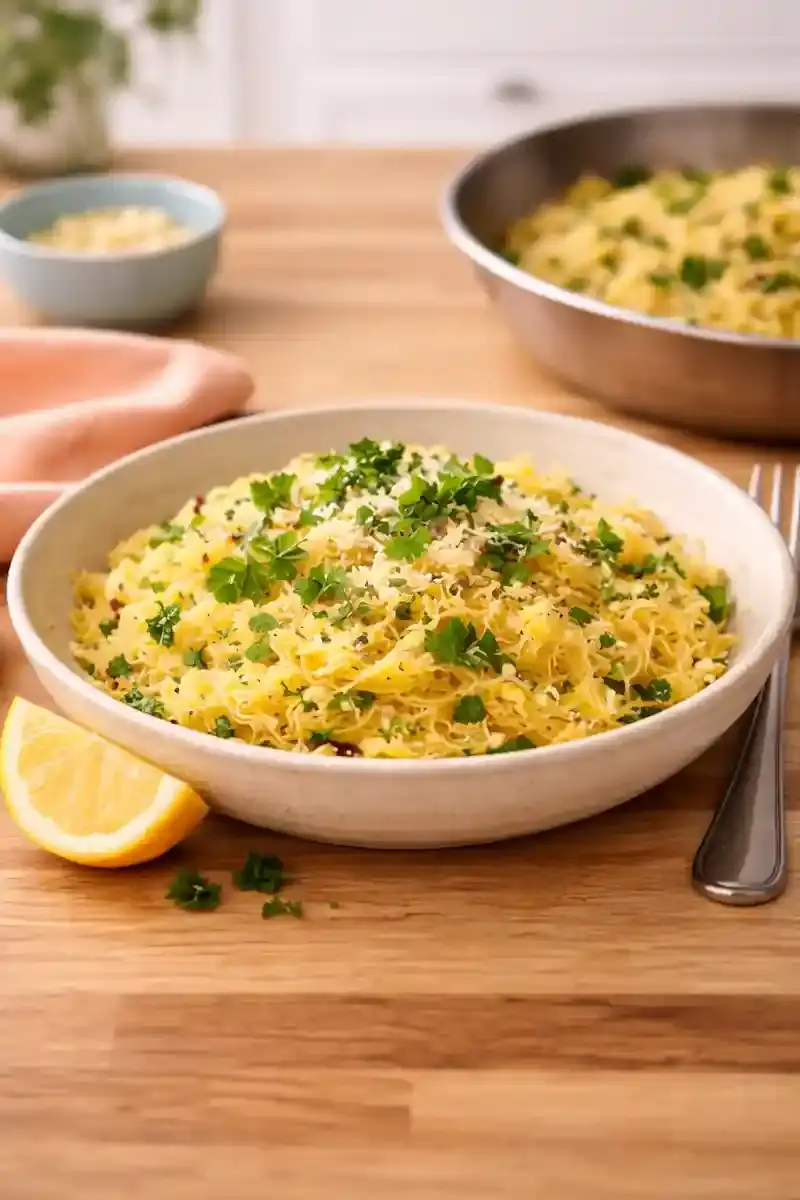
After roasting, let the squash rest for a few minutes before scraping. Then use a fork and pull gently across the flesh instead of pressing down too hard. This helps separate the strands without turning them soft or packed together.
For a better result, stop cooking as soon as the flesh is tender. Overcooked squash tends to lose its structure, which makes the strands shorter and more watery.
Best sauces to pair with spaghetti squash
Spaghetti squash has a mild flavor, so it works best with sauces that add flavor without weighing the dish down. In most cases, the best option is a sauce that coats the strands lightly rather than soaking them.
| Sauce | Flavor profile | Best with | How to use it |
|---|---|---|---|
| Marinara | Light, tomato-forward, familiar | Simple pasta-style meals | Spoon over warm strands in a light layer |
| Palomino sauce | Creamy tomato flavor without feeling too heavy | A more complete and comforting plate | Toss in a small amount so the strands stay distinct |
| Bang bang sauce | Sweet-spicy and bolder | Chicken, roasted vegetables, or a more modern twist | Use lightly so it does not overpower the squash |
| Tram sauce | Richer and more savory | A fuller dinner with protein or vegetables | Add just enough for flavor, not full coverage |
| Pesto | Herb-forward and savory | Quick lunches or vegetable-based meals | Stir in a small spoonful while the squash is warm |
| Garlic butter or lemon-herb sauce | Fresh, simple, and balanced | Light side dishes or clean-flavored meals | Drizzle lightly before serving |
| Olive oil and Parmesan | Mild, savory, and very simple | The easiest everyday version | Toss directly with the hot strands |
In general, spaghetti squash tastes best when the sauce supports the texture instead of hiding it. A light coating usually gives the most balanced result.
Tips for the best texture and flavor
If you want spaghetti squash that tastes better and keeps its shape, focus on three things: don’t overcook it, control moisture, and add sauce lightly.
- Cook until tender, not soft. The squash is ready when a fork separates the flesh easily, but the strands should still hold their shape. Overcooking is the main reason spaghetti squash turns mushy.
- Let it rest for a few minutes after roasting. This makes it easier to scrape and helps the strands stay more defined.
- Watch for extra moisture. If the strands seem watery, let them sit briefly before adding sauce. Too much moisture can weaken the texture.
- Season with balance. Garlic, herbs, lemon juice, salt, and pepper are usually enough to bring out the mild flavor without covering it up.
- Add sauce at the end and use just enough to coat. A light coating keeps the strands distinct and prevents the dish from feeling heavy or soggy.
- Use Parmesan or nutritional yeast for a savory finish. This adds flavor without needing a rich sauce.
For the best result, aim for spaghetti squash that is tender, lightly seasoned, and easy to separate into strands, not wet or overloaded with toppings.
Common mistakes to avoid
- Mushy strands: Usually caused by overcooking.
- Watery squash: Often caused by excess moisture or too much sauce.
- Short strands: Rings usually create a longer texture than halves.
- Hard center: Roast a little longer until the flesh separates easily.
Variations and substitutions
This spaghetti squash recipe is easy to adjust depending on how you want to serve it. For a more savory version, you can finish it with Parmesan. For a dairy-free option, use nutritional yeast instead. If you want a fresher flavor, add more parsley or a little lemon zest just before serving.
You can also change the seasoning without changing the method. Italian seasoning works well for a classic flavor, but dried oregano, basil, or a small pinch of red pepper flakes can shift the profile slightly while keeping the recipe simple.
To make it more filling, serve the squash with grilled chicken, turkey meatballs, sautéed mushrooms, or roasted vegetables. If you want a sauce-based version, add a small amount of palomino sauce, pesto, or another light pasta-style sauce after the strands are cooked and seasoned.
For a lighter adjustment, reduce the oil slightly and keep the final topping minimal. For a richer finish, add a little extra Parmesan and a spoonful of sauce just before serving.
Storage and reheating tips
Store leftover spaghetti squash in an airtight container in the refrigerator for up to 3 to 4 days. If possible, keep the strands and any heavier sauce separate so the texture stays more balanced when reheated. For general leftover safety, FoodSafety recommends using cooked leftovers within 4 days and reheating them to 165°F (74°C).
For reheating, warm the squash gently in a skillet over medium-low heat or microwave it in short intervals until heated through. Avoid overheating, because that can make the strands softer and release extra moisture.
If the squash seems watery after storage, let it sit in the pan for a minute or two before serving so some of the excess moisture can evaporate. Then add a small amount of fresh lemon juice, herbs, or Parmesan to refresh the flavor.
Safety notes
- Microwave for 1 to 2 minutes before cutting if the squash feels too firm. This can make prep easier.
- Use a stable cutting board and a sharp knife to reduce slipping while slicing.
- Let the squash cool slightly after roasting before scraping the strands.
- Check finishing ingredients for dietary needs. Parmesan contains dairy, while nutritional yeast is a dairy-free option.
These simple steps help make the recipe easier to prepare and serve safely.
PrintSpaghetti Squash Recipe

A light spaghetti squash recipe with garlic, lemon, and herbs. Roasted until tender, then tossed for a simple, flavorful pasta alternative.
- Prep Time: 10 minutes
- Cook Time: 40 minutes
- Total Time: 50 minutes
- Yield: 2–3 servings 1x
- Category: Side Dish
- Method: Roasting, Sautéing
- Cuisine: American
- Diet: Low Calorie
Ingredients
- 1 medium spaghetti squash
- 1 tbsp olive oil (or 1–2 tsp for a lighter version)
- 2 garlic cloves, minced
- 1/2 tsp salt
- 1/4 tsp black pepper
- 1/2 tsp Italian seasoning or dried oregano/basil
- Juice of 1/2 lemon
- 2 tbsp Parmesan cheese or 1 tbsp nutritional yeast (optional)
- Fresh parsley (optional)
Instructions
- Preheat the oven to 400°F (200°C). Cut the spaghetti squash in half lengthwise and scoop out the seeds.
- Lightly brush the cut sides with olive oil, then place the halves cut-side down on a baking sheet.
- Roast for 30 to 40 minutes, until the flesh is tender and easy to separate with a fork.
- Let the squash cool slightly, then scrape the inside into strands with a fork.
- Heat the remaining olive oil in a pan over medium heat. Add the garlic and cook for about 30 seconds, until fragrant.
- Add the spaghetti squash strands, then toss with salt, black pepper, and Italian seasoning until evenly coated and warmed through.
- Turn off the heat, add the lemon juice, and stir gently.
- Finish with parsley and Parmesan or nutritional yeast, if using, then serve warm.
Notes
- If the squash feels too firm to cut, microwave it whole for 1 to 2 minutes first to soften the skin slightly.
- For longer spaghetti-like strands, cut the squash into rings instead of lengthwise halves.
- If the strands seem soft or watery, the squash was likely overcooked or held too much moisture, so use sauce lightly and let it rest briefly before serving.
Nutrition
- Serving Size: 1 bowl
- Calories: 120
- Sugar: 3.9g
- Sodium: 320mg
- Fat: 7g
- Saturated Fat: 1.1g
- Unsaturated Fat: 5.6g
- Trans Fat: 0g
- Carbohydrates: 10g
- Fiber: 2.2g
- Protein: 2.5g
- Cholesterol: 1mg
FAQ about spaghetti squash recipe
Yes. The microwave is a useful shortcut, but oven roasting usually gives a drier texture and better flavor for this recipe.
Do not overcook it. Roast only until the flesh is tender and easy to separate, then use sauce lightly so the strands keep their shape.
Cutting the squash into rings can help create longer strands because it follows the natural fiber direction more closely.
Marinara, palomino sauce, pesto, and lemon-herb sauces are all good options because they add flavor without making the dish too heavy.
It usually keeps for 3 to 4 days in an airtight container. Reheat gently for the best texture.
More ways to build on this recipe
If you want to turn this spaghetti squash recipe into a fuller meal or try a different flavor direction, these related pages can help.
- Browse low-calorie recipes for more light meal ideas built around practical everyday cooking.
- Try palomino sauce if you want a smoother tomato-based option that pairs well with spaghetti squash.
- Use bang bang sauce in a small amount for a bolder sweet-spicy variation.
- Add tram sauce when you want a richer savory finish.
- Pair the meal with cucumber mint water for a fresh and simple drink idea.
Conclusion
This spaghetti squash recipe keeps things simple while still giving you a flavorful, easy-to-repeat dish. With the right roasting method, light seasoning, and a balanced sauce, it can work well as a lighter side or an everyday meal base.
It is also easy to adapt. You can serve it as written or build on it with sauces, proteins, and other low-calorie meal ideas.

