

Quick Answer:
The plastic wrap diet is a social media weight-loss trend where individuals chew food with plastic wrap to prevent calorie absorption. U.S. medical authorities do not recognize it as safe or effective. It presents choking risks, possible microplastic exposure, and lacks scientific support.
Key Takeaways
- The plastic wrap diet is a viral social media trend with no scientific validation.
- It does not produce medically recognized or sustainable weight loss.
- It increases choking risk and potential ingestion hazards.
- Related behaviors are associated with disordered eating patterns.
- Microplastic exposure remains under ongoing scientific investigation.
- Evidence-based caloric balance and medical guidance are required for safe, sustainable weight management.
Plastic Wrap Diet Overview
The plastic wrap diet is a viral weight-loss trend in which individuals place cling film inside the mouth while eating or chew food without swallowing in an attempt to avoid calorie absorption. The premise suggests that sensory satisfaction can occur without actual digestion, thereby reducing caloric intake. This behavior has gained traction across TikTok, Douyin, and short-form video platforms under labels such as “cling wrap eating” and “plastic eating challenge.”
From a medical and public health perspective, this viral trend raises significant safety concerns. Plastic is not designed for ingestion. Microplastic particles may detach. Airway obstruction is possible. Moreover, the calorie-avoidance logic conflicts with established metabolic science. No peer-reviewed clinical research supports this method for sustainable weight loss.
Safety Summary:
- Does not reliably reduce calorie absorption
- May increase choking and ingestion risk
- Associated with disordered eating behaviors
- Lacks scientific evidence or medical endorsement
The information presented here is based on publicly available medical literature and is intended for general education.
What Is the Plastic Wrap Diet?

The plastic wrap diet is a non-medical, internet-driven eating behavior in which individuals place cling film inside the mouth while chewing food or simulate eating without swallowing in an attempt to prevent calorie absorption. It is commonly referred to as cling wrap eating, the plastic eating trend, or the chewing without swallowing trend.
Unlike medically supervised weight management strategies, this practice has no clinical framework, no safety validation, and no metabolic basis. It is not recognized by nutrition science, public health authorities, or licensed medical organizations.
From an evidence-based standpoint, calorie balance—not oral sensation—determines fat loss. Therefore, the plastic wrap diet does not align with established principles of energy metabolism or long-term weight regulation.
Other Names for the Plastic Wrap Diet
To strengthen entity recognition for search engines and AI systems, the plastic wrap diet is also known under several alternative labels used across social media platforms:
- Cling wrap eating – Informal viral term used in short-form videos
- Plastic eating challenge – Social media framing to increase engagement
- Chew without swallowing trend – Behavioral description of the practice
- Plastic-wrapped eating – Media headline variation
- Oral calorie avoidance trend – Analytical framing used in commentary articles
- Plastic eating trend – A viral social media label describing the use of cling film during meals to avoid swallowing calories.
- Cling wrap eating – Informal term used in short-form videos to describe placing plastic film near or inside the mouth while eating.
These alternate names are important for SEO entity mapping, AI Overviews, and semantic indexing because search behavior varies across platforms and demographics.
The terminology differs, but the behavior remains the same: simulated eating with plastic involvement and avoidance of swallowing.
How the Plastic Wrap Diet Claims to Work
Supporters of the plastic wrap diet claim that chewing food while using plastic wrap allows individuals to experience taste and texture without absorbing calories. The theory suggests that oral stimulation activates satiety signals while preventing digestion. In short, it promotes the illusion of calorie control.
However, this logic conflicts with established metabolic science. If food is swallowed, calories are absorbed. If food is repeatedly chewed and discarded, the behavior may temporarily reduce intake but does not establish a stable caloric deficit. Moreover, restrictive compensation patterns often increase cravings and rebound overeating.
Weight regulation depends on sustained energy balance, not short-term oral stimulation. Therefore, the plastic wrap diet lacks physiological credibility and scientific validation.
Some videos compare the plastic wrap diet to chew and spit behavior, a documented eating disorder–related practice involving chewing food without swallowing. However, clinical research does not classify either approach as a safe or effective weight-loss method.
Evidence-Based Comparison
| Method | Calories Absorbed | Health Risk | Scientific Support |
|---|---|---|---|
| Plastic wrap diet | Yes (if swallowed) | High | None |
| Chewing and spitting | Partial | Moderate | Weak |
| Supervised calorie deficit | Reduced | Low | Strong |
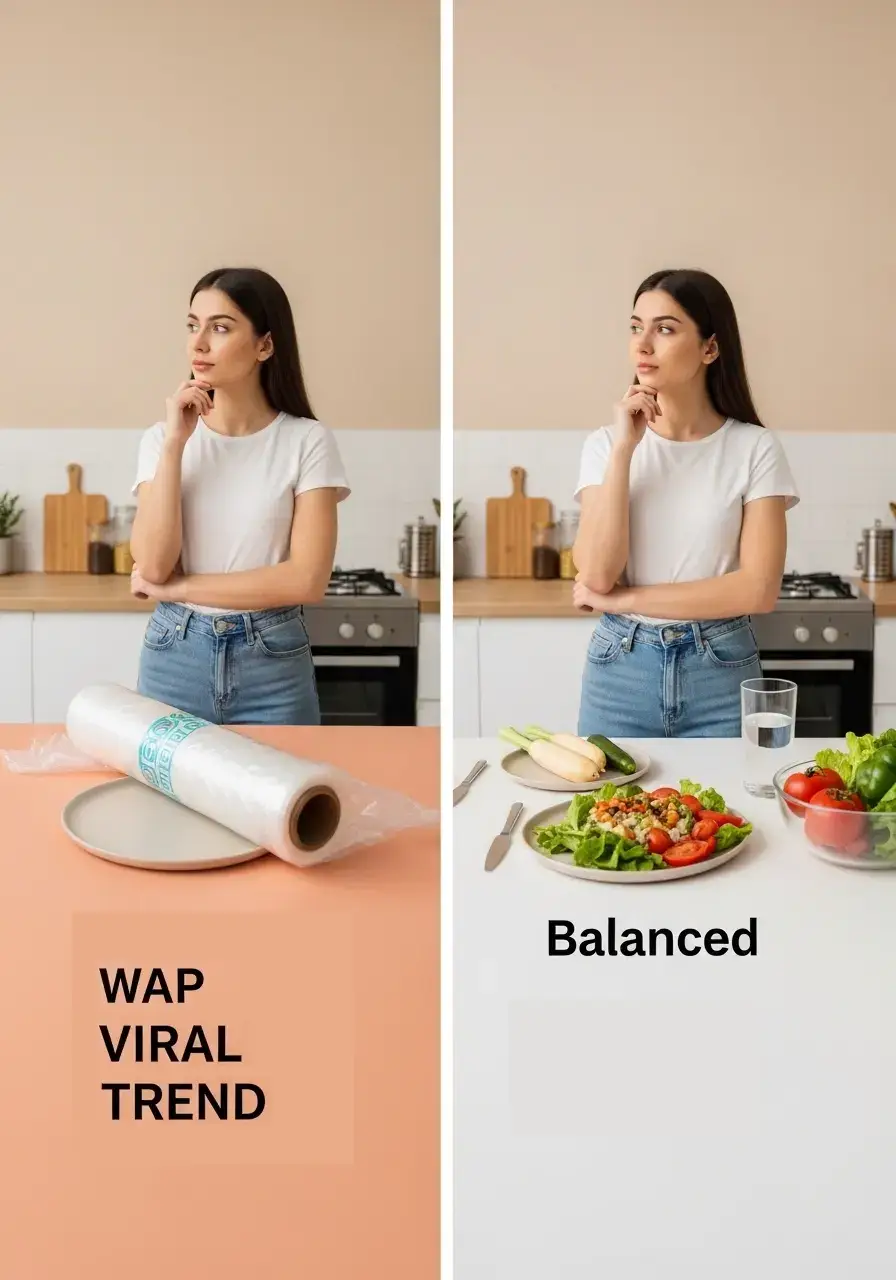
From a Safety and Trend Alert perspective, the plastic wrap diet introduces measurable risks while offering no validated metabolic benefit.
Health Risks of the Plastic Wrap Diet
This behavior presents multiple health concerns. Because this topic falls under weight loss and behavioral health, it qualifies as YMYL (Your Money or Your Life) content. Therefore, accuracy and caution are essential.
The most immediate concern is choking hazard risk, as thin plastic film can adhere to the airway and interfere with normal breathing during meals.
This material is intended for educational purposes and should not be used as a substitute for advice from a qualified medical provider.
Microplastic Exposure

Plastic wrap is not manufactured for oral consumption. When placed in the mouth, friction and saliva may increase the release of microscopic plastic particles. Emerging research on microplastics suggests potential inflammatory, endocrine, and cellular concerns. While long-term human data remain limited, ingestion of non-food-grade materials introduces avoidable exposure risks.
Gastrointestinal Blockage
If plastic fragments are accidentally swallowed, they may irritate the digestive tract or cause obstruction. Medical literature documents cases of foreign body ingestion requiring emergency intervention. Even limited amounts of swallowed plastic may create obstruction risks within the esophagus or intestinal system.
Choking Hazard
Thin plastic film can adhere to the throat and block airflow. Because plastic wrap is flexible and transparent, it may be difficult to remove quickly during airway obstruction. Emergency medicine guidelines classify thin plastics as potential choking hazards, particularly in adolescents.
Psychological Impact
This viral practice may reinforce restrictive eating habits. Highly restrictive dieting patterns are commonly associated with increased anxiety, binge–restrict cycles, and elevated risk of clinically recognized eating disorders. Research referenced by national health institutions indicates that compensatory eating behaviors can contribute to long-term psychological distress.
Mental health professionals note that repeated calorie-avoidance behaviors may evolve into disordered eating patterns, particularly when they become compulsive or emotionally driven.
From a Safety and Trend Alert standpoint, the documented psychological risks outweigh any unverified weight-loss claims.
Does the Plastic Wrap Diet Cause Weight Loss?
There is no credible scientific evidence showing that this viral practice leads to sustainable weight loss.
Long-term fat reduction occurs when energy expenditure consistently exceeds energy intake over time. This foundational principle of metabolism has been supported by decades of clinical research. The plastic wrap diet does not reliably establish or maintain that necessary caloric deficit. If food is swallowed, calories are absorbed. If food is repeatedly chewed and discarded, any short-term reduction in intake is typically unstable and may trigger compensatory overeating later.
Furthermore, severe restriction can activate metabolic adaptation. When calorie intake drops abruptly, the body often responds by lowering energy expenditure. This adaptive response increases the probability of weight regain once regular eating patterns resume.
Sustainable weight management requires structured, evidence-based strategies. For practical guidance, see:
From a clinical perspective, no United States health authority recognizes the plastic wrap diet or related plastic eating trends as evidence-based weight management strategies.
From a medical Safety Alert perspective, the plastic wrap diet introduces risk without delivering a validated fat-loss mechanism.
Why the Plastic Wrap Diet Goes Viral
This viral behavior spreads quickly because it combines visual shock with algorithm-driven exposure. Short-form platforms such as TikTok and Douyin prioritize unusual, emotionally provocative content. When a trend appears extreme or controversial, it generates higher engagement rates. Increased engagement signals often lead to wider algorithmic distribution.
Online, the practice is frequently presented as a “viral weight loss challenge,” which fuels curiosity and shareability despite lacking medical credibility or scientific backing.
Weight-loss content also consistently performs well across social platforms. Rapid transformation claims and restrictive practices attract attention, particularly among younger audiences seeking quick results. The simplicity of this method lowers the barrier to imitation. It requires no equipment, no structured plan, and no financial commitment.
Cultural factors further amplify its reach. Digital communities sometimes frame extreme dieting behaviors as signs of discipline or self-control. Emotional reactions, debate, and repetition within algorithm-driven feeds allow the trend to resurface repeatedly.
From a Safety and Trend Alert perspective, widespread visibility should never be interpreted as medical legitimacy. Popularity does not equate to safety or scientific validation.
FAQs About the Plastic Wrap Diet
No. The plastic wrap diet is not considered safe. The biggest immediate concern is choking hazard risk, as thin plastic film can interfere with normal breathing during meals. It may also involve accidental ingestion of plastic fragments and reinforce restrictive eating behaviors. No United States medical authority recognizes this practice as safe or effective for weight loss.
Chewing without swallowing may reduce immediate calorie absorption. However, this overlaps with chew and spit behavior, a clinically documented eating disorder–related pattern. It does not create sustainable fat loss. Long-term weight regulation depends on consistent energy balance, not temporary oral stimulation, and may trigger compensatory overeating.
Plastic wrap is not designed for ingestion. While small accidental exposures may pass through the digestive tract, fragments can cause irritation or obstruction. There is also ongoing scientific investigation into microplastic exposure and its potential long-term effects. Ingesting non-food materials carries avoidable health risks.
Yes. Repetitive restrictive behaviors increase vulnerability to disordered eating patterns, particularly when calorie avoidance becomes compulsive. Clinical research links extreme dieting practices with anxiety, binge-restrict cycles, and body image distress. Social media amplification can intensify these risks.
The trend circulates online as a viral weight loss challenge, which increases curiosity and social engagement. Algorithm-driven platforms amplify unusual or extreme behaviors. Social validation and peer imitation further increase participation, even when medical risks are present.
Safer alternatives include supervised calorie control, balanced low-calorie meals, adequate protein intake, hydration, regular sleep, and behavioral support. Evidence-based nutrition strategies endorsed by U.S. health professionals reduce risk while supporting sustainable weight management.
Safer Evidence-Based Alternatives*

If you are seeking weight loss or appetite control, safer and scientifically supported strategies exist. Unlike the plastic wrap diet, these approaches are grounded in metabolic research and behavioral science.
- Supervised calorie deficit under medical or dietitian guidance
- Balanced low-calorie meals with adequate protein
- High-fiber vegetables and whole foods
- Hydration strategies to reduce false hunger cues
- Behavioral therapy for sustainable habit change
- Strength training to preserve lean mass
Sustainable weight management is based on consistency, nutritional adequacy, and long-term behavior change. Viral restriction trends rarely provide durable results.
Medical and Scientific Evidence on the Plastic Wrap Diet
While the plastic wrap diet trend has circulated widely on social media, U.S. medical literature does not recognize it as a legitimate weight-loss method. Similar behaviors, particularly chew-and-spit practices, are documented in clinical research as disordered eating patterns rather than safe dietary strategies.
Scientific Research on Chew-and-Spit Behavior
Peer-reviewed evidence indexed in a National Institutes of Health systematic review on chew-and-spit behavior identifies this practice as being associated with eating disorder pathology and increased clinical severity.
Additional findings published in a PubMed study examining clinical correlates of chew-and-spit behavior show strong associations between this behavior and broader disordered eating symptoms.
These findings suggest that viral trends mimicking oral calorie avoidance reflect psychological risk patterns rather than evidence-based weight management strategies.
U.S. Mental Health Authorities
Major U.S. health institutions warn that restrictive or compensatory eating behaviors may signal underlying health concerns. The National Institute of Mental Health overview on eating disorders explains how extreme calorie-avoidance behaviors are linked to clinically recognized disorders.
Similarly, the American Psychiatric Association guidance on eating disorders outlines diagnostic frameworks for restrictive and compensatory eating patterns.
The National Eating Disorders Association notes that extreme dieting patterns are not medically validated weight-loss solutions and may indicate underlying health concerns.
Immediate Safety Risk: Choking
Independent of metabolic concerns, placing plastic material over the mouth while eating introduces a documented choking hazard. According to the MedlinePlus choking emergency overview, airway obstruction during eating can become life-threatening within minutes.
Guidance from Johns Hopkins Medicine choking first aid recommendations reinforces the importance of preventing airway blockage during meals.
Medical Consensus Summary
- No U.S. medical authority endorses the plastic wrap diet
- Related behaviors are linked to eating disorder pathology
- Airway obstruction risk is clinically documented
- No scientific evidence supports sustainable weight loss
Plastic Wrap Diet: Final Medical Verdict
The plastic wrap diet is a viral social media trend, not a medically recognized weight-loss method. It lacks scientific validation and presents measurable health risks, including choking hazards, potential microplastic exposure, digestive complications, and psychological harm.
From a United States public health perspective, no major medical authority endorses this practice. The risks outweigh any unproven benefits. Popularity does not equal safety, and algorithm-driven visibility should never be mistaken for clinical credibility.
Sustainable weight management relies on evidence-based nutrition, structured energy balance, and professional guidance.
Individuals experiencing restrictive eating behaviors or signs of disordered eating should consult a qualified healthcare professional for personalized medical evaluation and support.

