
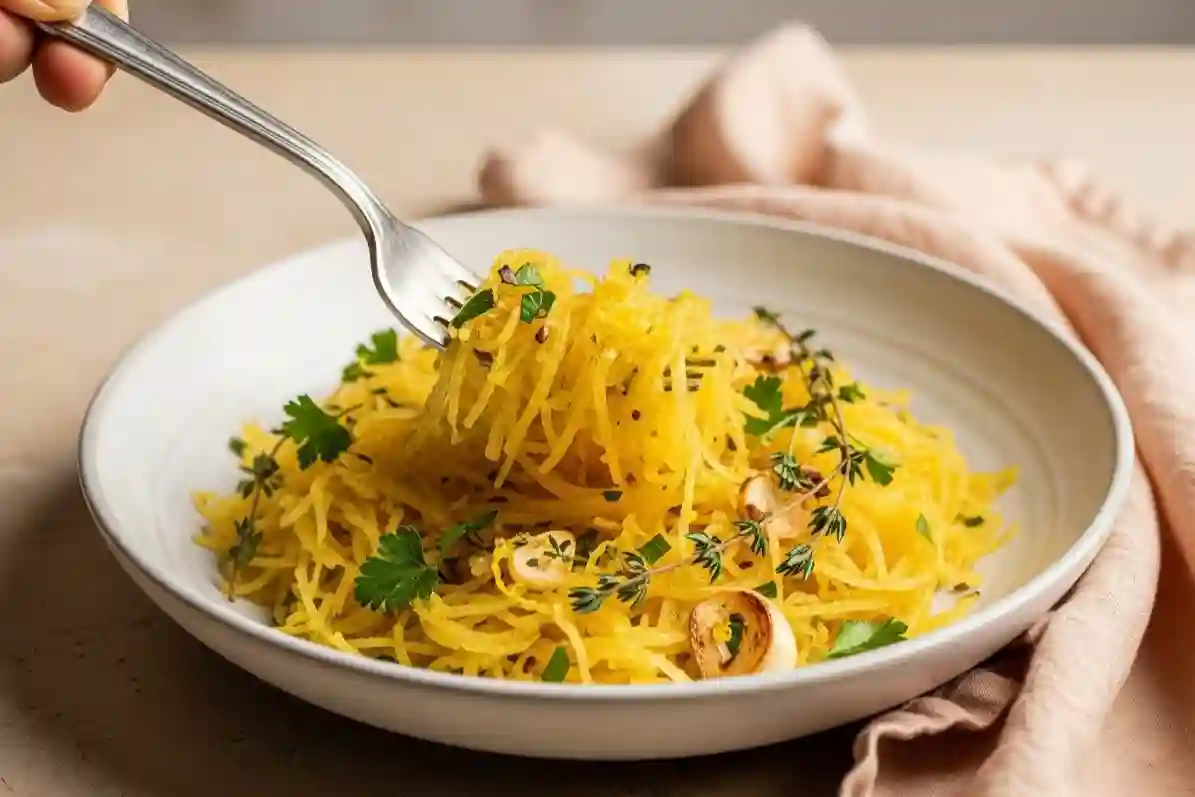
The first time I tried this spaghetti squash recipe, I was stunned. As I scraped the inside with a fork, it unraveled into golden strands. Each bite had a light texture but a cozy, pasta-like feel.
Garlic filled the air while lemon brightened the flavor. I made this dish on a whim. Now it’s one I return to weekly.
This spaghetti squash recipe is healthy, comforting, and easy to make. It fits perfectly into any light dinner rotation.
As a chef, I love recipes that don’t feel like “diet food.” This one delivers comfort without heaviness. Whether you’re new to Cucurbita pepo or just want fewer carbs, this is a smart, flavorful choice.
How to Roast Spaghetti Squash Perfectly
Roasting spaghetti squash is my go-to method because it’s simple, reliable, and brings out the best flavor. It creates tender strands with a subtle sweetness, perfect for light, satisfying meals.
First, choose the right squash. It should feel heavy for its size and have smooth, golden-yellow skin. If you see soft spots or cracks, pick another one.
Carefully use a sharp chef’s knife to cut the squash in half from top to bottom. To make this easier, microwave the whole squash for 3-4 minutes. That softens the skin slightly and reduces your risk of slipping.
Then, scoop out the seeds and brush the cut sides with olive oil. After that, sprinkle with salt and pepper.
Now, place the halves cut-side down on a parchment-lined baking sheet. Roast at 400°F (200°C) for 35-40 minutes. The skin should yield easily when pierced with a fork.
After baking, allow the squash to sit for 5 to 10 minutes before handling. Finally, use a fork to shred it into tender, spaghetti-like strands.
Pro Tip: Always let it cool a bit. Scraping while too hot can lead to soggy strands.
For more techniques, Penn State Extension shares home-cook-friendly ways to prepare spaghetti squash using steam or roast methods.
Light & Healthy Garlic Spaghetti Squash Recipe
This light and healthy spaghetti squash recipe is full of flavor without feeling heavy. It’s one I turn to when I want something warm and satisfying, but not too rich. The lemon and garlic balance the natural sweetness of the squash, while the herbs add just enough complexity.
Even better, this recipe is endlessly flexible. You can enjoy it on its own, or pair it with your favorite protein or salad. For instance, I often serve it with this carrot ribbon salad recipe for a bright, crunchy contrast.
Ingredients
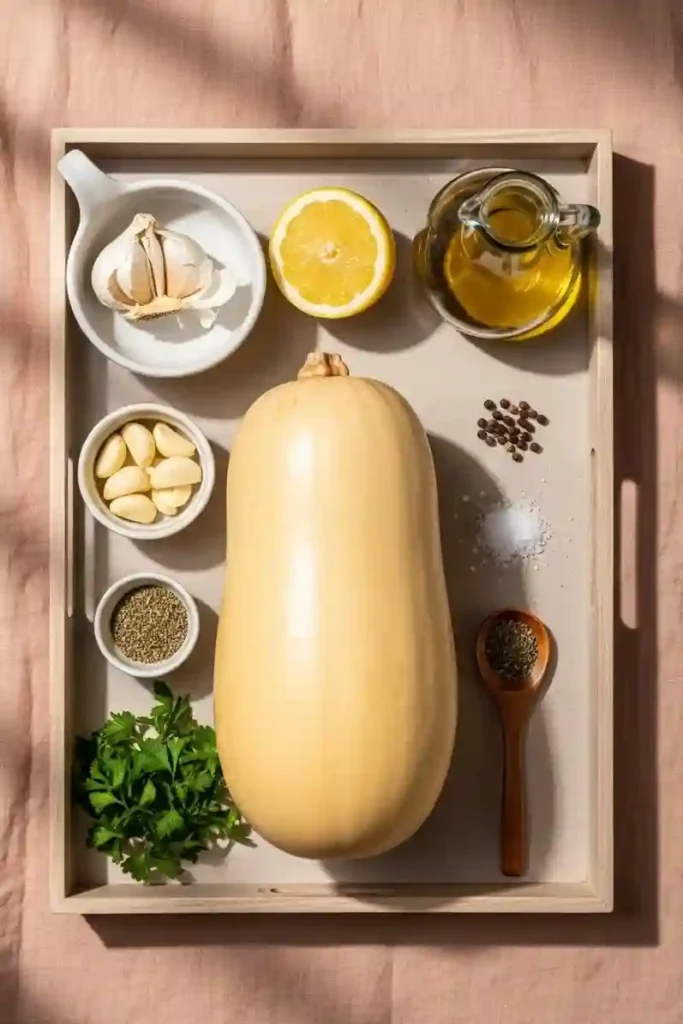
Here’s what you need for one medium squash:
| Ingredient | Amount |
|---|---|
| Spaghetti squash (medium) | 1 whole |
| Olive oil | 1 tbsp (or 1-2 tsp for fewer calories) |
| Garlic, minced | 2 cloves |
| Salt | ½ tsp, or to taste |
| Black pepper | ¼ tsp |
| Dried Italian seasoning | ½ tsp |
| Lemon juice | Juice of ½ lemon |
| Parmesan or nutritional yeast (optional) | 2 tbsp Parmesan or 1 tbsp yeast |
| Fresh parsley (optional) | Chopped, for garnish |
How to Make This Spaghetti Squash Recipe
A light and healthy dish packed with flavor, this spaghetti squash recipe comes together in under an hour. Follow these easy steps to roast, season, and serve a naturally low-carb side or main.
- Roast the Squash
Slice the spaghetti squash lengthwise, then scoop out the seeds with a spoon. Roast it at 400°F (200°C) for 30–40 minutes until tender.
- Cool and Scrape
Let the squash cool for a few minutes, then use a fork to gently scrape the flesh into long, noodle-like strands.
- Heat the Olive Oil
Warm the remaining olive oil in a large skillet over medium heat.
- Sauté the Garlic
Add the minced garlic to the skillet and cook for about 30 seconds, just until fragrant. Don’t let it brown.
- Add the Squash
Transfer the spaghetti squash strands into the pan. Stir well to coat everything evenly in the garlic oil.
- Season Everything
Season the mixture with salt, pepper, and your choice of dried herbs. Toss until the squash is well seasoned and warmed through.
- Add Lemon Juice
Turn off the heat. Squeeze in fresh lemon juice and stir again to brighten the flavors.
- Finish and Serve
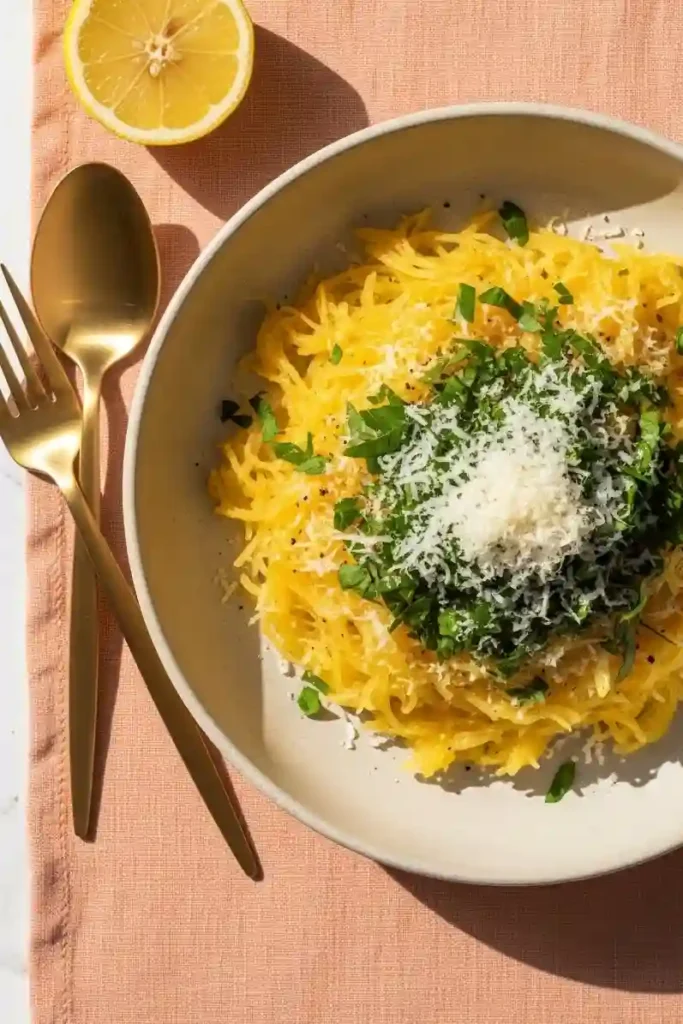
Top with grated Parmesan or nutritional yeast, and a sprinkle of fresh parsley if desired. Serve hot and enjoy.

How to Season Spaghetti Squash for Maximum Flavor
Seasoning is what truly brings a spaghetti squash recipe to life. On its own, this squash has a mild, slightly sweet flavor. However, when paired with bold seasonings, it becomes far more satisfying.
To start, use olive oil, garlic, salt, and pepper. Even with these basics, you’ll notice a big difference. But for more impact, try layering herbs and spices to build depth.
In most cases, I rely on dried Italian seasoning. This easy blend usually includes oregano, basil, and thyme. This gives you a balanced blend of flavors with just one easy sprinkle. Still, fresh herbs work beautifully too. Adding chopped parsley, basil, or chives at the end brightens the entire dish.
If you’re after stronger flavor, consider a few extra touches. For instance, red pepper flakes bring heat, while smoked paprika adds depth. Additionally, a bit of lemon zest lifts everything with a citrus note. On busy days, I’ll stir in a spoonful of pesto for a quick, Mediterranean twist.
For dairy-free versions, nutritional yeast is a game-changer. Not only does it add a subtle cheese-like taste, but it also keeps the dish lighter. To make it heartier, you can also toss in cherry tomatoes, sautéed spinach, or even sliced olives.
Overall, when you’re craving a light yet bold side, the right seasoning transforms this spaghetti squash recipe from simple to crave-worthy.
Lastly, if you’d like to turn it into a full meal, try serving it with something protein-rich like Hamachi Crudo. The combination is clean, flavorful, and balanced.
Is Spaghetti Squash Healthy? Benefits & Nutrition
Yes, spaghetti squash is a smart, nutrient-dense choice. It’s naturally low in calories and carbs, which makes it ideal for anyone following a light or low-carb eating plan.
One cup of cooked spaghetti squash contains just around 42 calories, yet it’s packed with benefits, according to USDA FoodData Central. It provides a good source of fiber, vitamin C, manganese, and traces of B vitamins. These nutrients support digestion, immunity, and energy levels.
Unlike regular pasta, spaghetti squash doesn’t spike blood sugar, as noted by Healthline, making it a great low-glycemic alternative.
That’s why many people use it as a gluten-free, low-glycemic alternative to traditional noodles. Plus, it fits well into vegetarian, Whole30, paleo, and diabetic-friendly diets.
Its mild flavor also makes it a great base for nutrient-boosting ingredients. Add greens like spinach, healthy fats like olive oil, or anti-inflammatory extras like turmeric or garlic.
According to USDA data, this winter squash, also called Cucurbita pepo, delivers nutrition without heaviness. It helps you feel full, but not weighed down. Verywell Fit also highlights its potassium and B vitamin content as part of a nutrient-dense profile.
Want to round out your meal? Serve it with a mango turmeric smoothie for an anti-inflammatory bonus.
Nutrition & Cost Breakdown
Light Garlic Spaghetti Squash (1-Cup Serving, with Oil + Lemon)
This spaghetti squash recipe is light but nutrient-rich, perfect for low-carb, anti-inflammatory, or calorie-conscious diets. A typical 1-cup serving (with olive oil and lemon) includes:
| Nutrient | Amount |
|---|---|
| Calories | 74 kcal |
| Protein | 1.0 g |
| Fiber | 2.2 g |
| Carbohydrates | 7.0 g |
| Fat | 5.8 g |
| Vitamin C | 9.2 mg (10% DV) |
| Sodium (with seasoning) | 140 mg |
These values are based on USDA and FDA averages. This serving remains well under daily sodium and calorie thresholds. With just 74 calories, it supports weight loss goals, while 5.8g of fat from olive oil contributes heart-healthy unsaturated fats. The 2.2g of fiber aids digestion, and 1g of protein provides a small boost to satiety.
| Nutrient | % Daily Value | Category |
|---|---|---|
| Calories | 3.7% | Very Low |
| Protein | 2.0% | Low |
| Fiber | 7.9% | Moderate |
| Fat | 8.9% | Moderate (healthy fats) |
| Vitamin C | 10% | Mild |
| Sodium | 5.8% | Low |
Cost Breakdown of Light Garlic Spaghetti Squash (Per Serving)
Here’s a U.S.-based estimate for 4 servings of this recipe:
| Ingredient | Cost (USD) |
|---|---|
| 1 medium spaghetti squash | $2.50 |
| Olive oil (1 tbsp) | $0.30 |
| Garlic (2 cloves) | $0.15 |
| Half lemon | $0.25 |
| Dried herbs & salt (estimate) | $0.20 |
| Total (4 servings) | $3.40 |
| Cost per serving | $0.85 |
This makes the recipe not only light and healthy, but also highly affordable. Great for prepping ahead, saving money, or adding a light, healthy side.
What to Eat with Spaghetti Squash
Spaghetti squash is incredibly versatile. Because of its mild flavor and pasta-like texture, it pairs beautifully with many sides and mains. Whether you want to keep it plant-based or add protein, there’s no shortage of options.
For a light lunch, try serving it with a fresh salad like this carrot ribbon salad. The crunch contrasts perfectly with the tender strands.
Want more protein? Pair it with grilled chicken, baked salmon, or sautéed chickpeas. These simple additions make it a complete, satisfying meal.
Looking for comfort food? Spoon over some tahini, pesto, or marinara to enhance flavor before serving. These add bold flavors without heavy calories. If you prefer creamy textures, a light cashew sauce or Greek yogurt drizzle works well too.
Hosting brunch? Serve a scoop alongside this homemade bagel recipe for a smart, carb-conscious spread.
No matter how you serve it, this spaghetti squash recipe makes a great base. You can dress it up or down depending on the occasion, and it always feels fresh.
Storage, Freezing & Reheating Tips
If you have leftovers, don’t worry, spaghetti squash stores well and reheats beautifully with the right steps.
To refrigerate: Let the squash cool completely, then transfer it to an airtight container. You can refrigerate the squash for up to five days without losing texture. Avoid sealing it while still warm, or you’ll trap moisture and cause sogginess.
To freeze: Portion the cooked strands into freezer-safe bags or containers. Squeeze out extra air from the storage bag and mark it with the freezing date. Frozen squash lasts up to 3 months. When you’re ready to use it, thaw in the fridge overnight for the best texture.
To reheat: Warm the squash gently in a skillet with a splash of oil or broth. You can also microwave it for 1-2 minutes, but stir halfway to prevent hot spots. Avoid overcooking, or the strands may turn mushy. Cleveland Clinic confirms that light sautéing or draining can improve texture and preserve nutrients.
Pro Tip: If the squash releases extra water after reheating, simply drain it or sauté for a few minutes to dry it out.
With these storage tips, you’ll always have a quick, healthy side ready to go, even on busy nights.
Common Mistakes to Avoid
Even simple recipes like this one can go wrong without a few key tips. If your spaghetti squash turns out mushy or bland, one of these mistakes might be the reason.
1. Skipping the cooling time
It’s tempting to shred the squash right out of the oven. But if it’s too hot, the strands break down and get watery. Let it rest for 5-10 minutes before scraping.
2. Over-roasting the squash
More time doesn’t mean better texture. If you cook it too long, the flesh turns soft and loses its “spaghetti” shape. Stick to the 30-40 minute range and check with a fork.
3. Under-seasoning
Spaghetti squash is mild. Without enough salt, acid, or herbs, it tastes flat. Use lemon juice, garlic, and dried herbs to bring it to life.
4. Using too much oil
While fat adds flavor, overdoing it makes the squash feel greasy. For a lighter option, use 1-2 teaspoons instead of a full tablespoon.
5. Forgetting to drain moisture
If the cooked strands look wet, don’t skip this step. Either drain in a colander or give them a quick sauté to reduce moisture.
By avoiding these mistakes, your spaghetti squash recipe will turn out light, tasty, and consistent every time.
Frequently Asked Questions About Spaghetti Squash
Roast it, then toss with olive oil, garlic, lemon juice, and herbs. It’s perfect as a light pasta swap or with salad or grilled protein.
Use it in stuffed boats, breakfast hash, casseroles, or stir-fries. Its neutral flavor works in both savory and slightly sweet recipes.
Start with garlic, olive oil, and herbs. Add lemon zest, chili flakes, or pesto for extra flavor. Always season after roasting for best results.
Yes. One cup has ~42 calories, plus fiber and vitamin C. It’s low-carb, gluten-free, and fits into Whole30, paleo, or diabetic diets.
Roasted and shredded into strands is most common. People use it as pasta, in boats, or topped with sauce, greens, or protein.
Try marinara, pesto, tahini, or lemon-garlic butter. Its mild flavor pairs well with bold sauces and protein toppings.
Final Thoughts on This Light & Irresistible Spaghetti Squash Recipe
This spaghetti squash recipe isn’t just healthy, it’s satisfying, quick to prepare, and endlessly flexible. I’ve made it dozens of times, and it always feels like comfort food without the guilt.
Whether you’re cooking for one or serving guests, this dish adapts easily. Add your favorite toppings, pair it with protein, or enjoy it with a salad or smoothie. Once you master the roasting technique and play with seasoning, it becomes a dependable weeknight favorite.
PrintSpaghetti Squash Recipe
A light and healthy spaghetti squash recipe made with garlic, lemon, and herbs. Perfect for clean eating and simple weeknight cooking.
- Prep Time: 10 minutes
- Cook Time: 40 minutes
- Total Time: 50 minutes
- Yield: 2–3 servings
- Category: Side Dish
- Method: Roasting, Sautéing
- Cuisine: American
- Diet: Low Calorie
Ingredients
- 1 medium spaghetti squash
- 1 tbsp olive oil (or 1–2 tsp for lighter version)
- 2 garlic cloves, minced
- ½ tsp salt
- ¼ tsp black pepper
- ½ tsp Italian seasoning or dried oregano/basil
- Juice of ½ lemon
- 2 tbsp Parmesan cheese or 1 tbsp nutritional yeast (optional)
- Fresh parsley (optional)
Instructions
- Roast the squash at 400°F (200°C) for 30–40 minutes until fork-tender.
- Let it cool slightly, then scrape the inside into strands using a fork.
- Heat the remaining olive oil in a pan set to medium temperature.
- Stir in the chopped garlic and sauté for around 30 seconds until aromatic.
- Add the spaghetti squash strands and stir to coat.
- Season with salt, pepper, and herbs, then toss well.
- Turn off the heat and add lemon juice. Stir again.
- Just before serving, sprinkle with parsley and either Parmesan or nutritional yeast.
Notes
- Use nutritional yeast instead of Parmesan for a dairy-free option.
- Reduce oil to 1–2 teaspoons for a weight-loss variation.
- Serve alongside grilled meat or a crisp, refreshing salad for balance.