
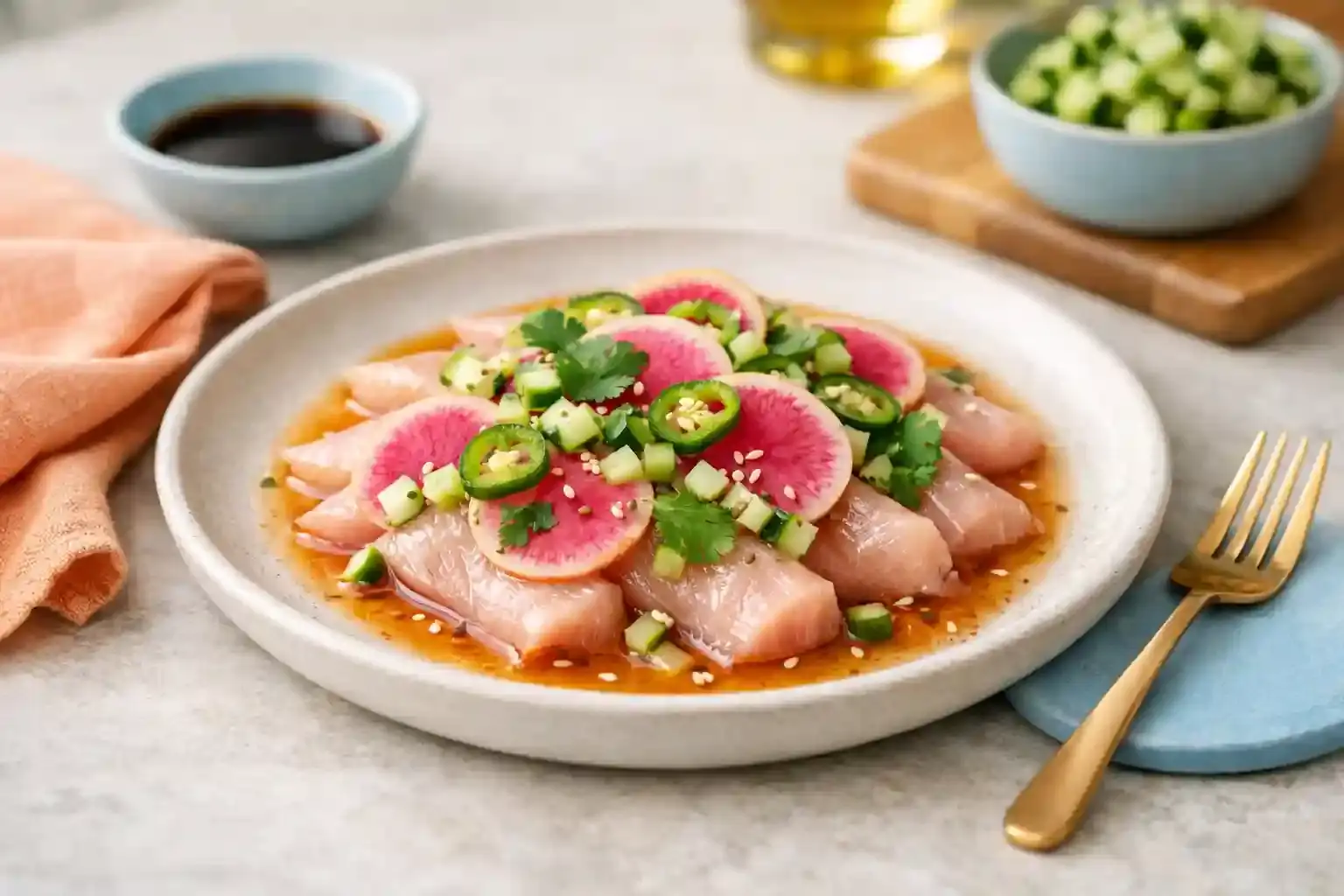
Hamachi crudo is a fresh raw fish dish made with thin slices of hamachi, also called Japanese yellowtail, finished with a light citrus-soy dressing and simple garnishes. This version keeps the fish delicate and clean-tasting, with crisp vegetables, a little heat, and bright acidity for a balanced appetizer.
Key Takeaways
- Hamachi crudo is made with thinly sliced raw yellowtail served with a light dressing, not a heavy sauce.
- Hamachi has a mild, buttery texture that works especially well with citrus, ponzu, sesame, and fresh herbs.
- The fish should be sliced thinly, kept cold, and dressed right before serving for the best texture.
- Crisp toppings like radish, cucumber, and serrano add contrast without covering the flavor of the fish.
- Unlike ceviche, crudo is not left to cure in acid for a long time, so the fish stays silky and tender.
Introduction
Hamachi crudo is a raw yellowtail dish served with a light dressing and a few fresh garnishes. It is known for its clean flavor, delicate texture, and simple presentation, making it a popular choice for an elegant appetizer.
This recipe uses ponzu, lime, sesame oil, cucumber, radish, and serrano to highlight the fish without overpowering it. You will also find practical tips for slicing, seasoning, and serving hamachi crudo so it stays fresh, balanced, and appealing on the plate.
Update note: This article was updated with clearer instructions, improved serving guidance, and more practical tips for hamachi crudo.
What Is Hamachi Crudo?
Hamachi crudo is a raw fish dish made with thinly sliced hamachi, usually finished with a light dressing just before serving. In this recipe, the dressing combines ponzu, lime, tamari, mirin, and sesame oil, while cucumber, watermelon radish, and serrano add freshness, crunch, and a little heat.
Hamachi is Japanese yellowtail, a fish known for its mild flavor and buttery texture. That rich but delicate character is why it works so well in crudo, where the goal is to enhance the fish with citrus, salt, and contrast rather than hide it under a heavy sauce.
Unlike ceviche, hamachi crudo is not left to cure in acid long enough to change the texture of the fish. And unlike plain sashimi, it is served with a dressing and garnishes that create a more layered, ready-to-serve appetizer.
Why This Recipe Works
This hamachi crudo works because each element supports the fish instead of overpowering it. Hamachi has a mild flavor and buttery texture, so it pairs well with a dressing that adds brightness, salt, and a little richness without feeling too sharp or heavy.
Ponzu, lime, and tamari bring acidity and savory depth, while mirin softens the flavor with a touch of sweetness. Yuzu kosho and serrano add gentle heat, and the cucumber and watermelon radish bring fresh crunch. The result is a balanced appetizer that feels light, clean, and polished.
It also works well at home because it comes together quickly once everything is prepared. There is no cooking involved, and when the fish is sliced neatly, kept cold, and dressed just before serving, the dish feels elegant without being complicated.
Ingredients You Need
The ingredient list for hamachi crudo is short, but each part has a clear role. The fish is the center of the dish, while the dressing and garnishes add brightness, texture, and contrast.
Main ingredient
- 225 g sashimi-grade yellowtail, trimmed and well chilled
Dressing ingredients
- 2 tablespoons gluten-free ponzu sauce
- 1 tablespoon reduced-sodium tamari
- 2 tablespoons freshly squeezed lime juice
- 1 ½ teaspoons mirin
- ½ to ¾ teaspoon green yuzu kosho paste, depending on how much heat you want
- 1 teaspoon dark toasted sesame oil
Garnishes
- ¼ of a small Persian cucumber, finely chopped
- ¼ watermelon radish, cut into thin matchsticks
- ½ serrano chili, sliced very thin
- Fresh cilantro leaves, optional
- Light sprinkle of sesame seeds
Why these ingredients work well together
The ponzu and lime bring the bright acidity that makes crudo taste fresh. Tamari adds savory depth, while mirin softens the sharper edges in the dressing. Sesame oil gives a little richness, but only in a small amount so it does not dominate the fish.
The cucumber and radish add crunch and a cool, clean contrast to the soft texture of the hamachi. Serrano brings a little heat, and sesame seeds or cilantro can finish the plate without making it feel crowded.
How to Slice Hamachi for Crudo
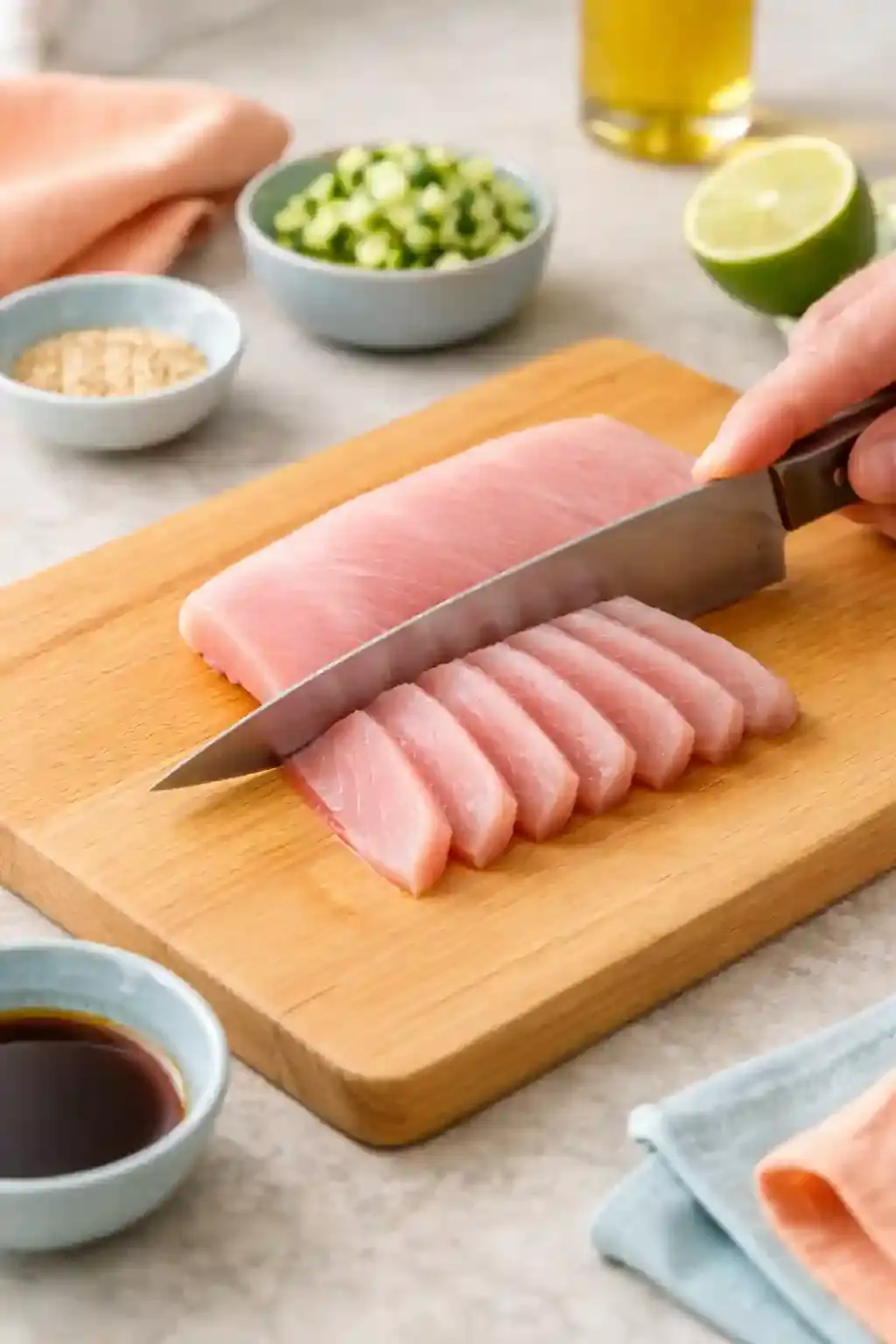
Slicing matters a lot in hamachi crudo because the texture is part of what makes the dish feel refined. Thin, clean slices help the fish stay tender on the plate and pleasant to eat, while thick or uneven cuts can make it feel heavy.
Start with very cold fish. Placing the hamachi in the freezer for about 10 minutes helps firm it slightly, which makes cleaner slicing easier. Use a very sharp knife and cut the fish into thin, even pieces with smooth strokes rather than pressing down.
Try to slice against the grain when possible for a softer bite. Once the fish is cut, arrange it in a single layer on a chilled plate so the slices stay neat and cool until the dressing is added.
How to Make Hamachi Crudo
Once the fish is cold and the ingredients are ready, hamachi crudo comes together quickly. The key is to keep the slices neat, the dressing light, and the timing close to serving.
- Place the hamachi in the freezer for about 10 minutes.
This helps firm the fish slightly so it is easier to slice cleanly. - Make the dressing.
In a small bowl, whisk together the ponzu, tamari, lime juice, mirin, yuzu kosho, and sesame oil until smooth and combined. - Slice the hamachi.
Use a very sharp knife to cut the fish into thin, even pieces. - Arrange the fish on the plate.
Lay the slices in a single layer on a chilled serving plate or platter. - Add the garnishes.
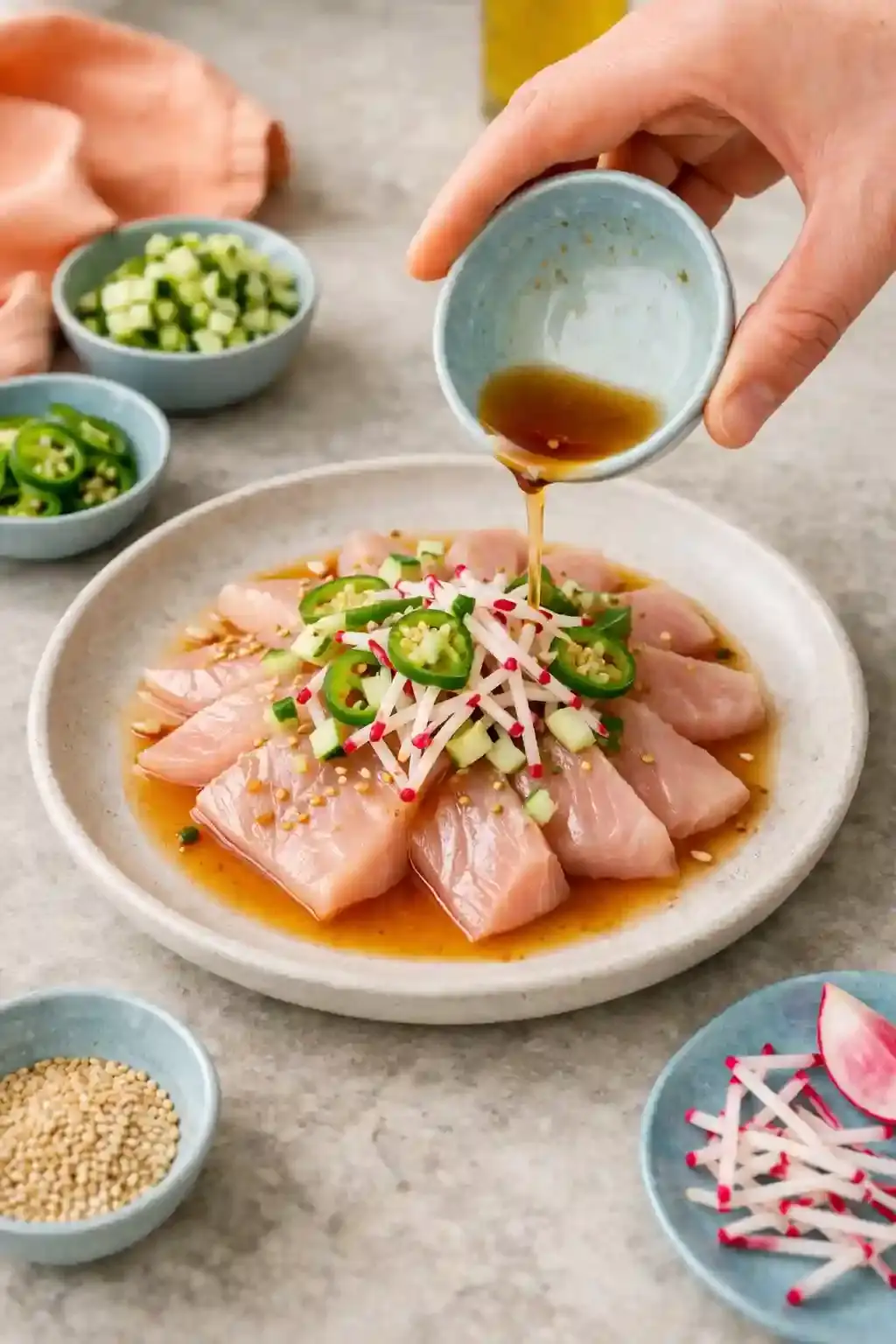
Scatter the chopped cucumber, watermelon radish, and thin serrano slices over the fish. - Dress the crudo just before serving.
Spoon or drizzle the dressing lightly over the top so the fish stays delicate and fresh. - Finish and serve.
Add cilantro, if using, and a light sprinkle of sesame seeds, then serve immediately while the fish is still cold.
How to Serve It Safely
Because hamachi crudo is served raw, safe handling matters as much as flavor. Start with sashimi-grade fish from a trusted source, keep it well chilled, and wait to dress it until the last moment so the texture stays clean and delicate.
Keep the fish refrigerated until you are ready to slice it, and use a cold plate for serving if possible. Avoid leaving the prepared crudo at room temperature for long, especially once the dressing has been added. The citrus and ponzu should brighten the fish, not sit on it long enough to change its texture.
It is also best to prepare only what you plan to serve right away. Hamachi crudo is at its best when it is fresh, cold, and lightly seasoned, so timing is part of both quality and food safety.
Best Sauces and Flavor Pairings for Hamachi
Hamachi has a mild, buttery flavor, so the best pairings are the ones that add contrast without overwhelming it. In most cases, that means using bright acidity, a gentle savory note, a little heat, and crisp fresh toppings instead of anything too heavy or sweet.
Ponzu works especially well because it brings citrus and umami in one ingredient. Lime adds extra brightness, while tamari gives the dressing a deeper savory edge. A small amount of sesame oil can round out the flavor, but it should stay in the background so the fish still tastes clean and delicate.
For garnishes, cucumber and watermelon radish add crisp texture, while serrano brings fresh heat in small amounts. Cilantro can add a more herbal finish, and sesame seeds give a subtle nutty note. If you enjoy sauce ideas for other light dishes, a broader homemade sauces guide can also be useful when thinking about balanced flavor combinations.
The main idea is restraint. Hamachi crudo tastes best when the dressing and toppings support the fish, rather than covering its texture and natural flavor.
Hamachi Crudo vs Sashimi vs Ceviche
These three dishes all feature raw or nearly raw fish, but they are not prepared in the same way. The main difference comes down to how the fish is seasoned and how long it sits with acid.
| Dish | What it is | How it is seasoned | Texture |
|---|---|---|---|
| Hamachi crudo | Thinly sliced raw hamachi served as a composed dish | Dressed just before serving with citrus, soy, oil, and garnishes | Silky, tender, lightly dressed |
| Sashimi | Plain slices of very fresh raw fish | Usually served without dressing, with soy sauce or condiments on the side | Clean, pure, delicate |
| Ceviche | Raw fish or seafood cured in citrus juice | Mixed with enough acid to season and cure the fish over time | Firmer, more cured, less silky |
Hamachi crudo is closer to sashimi than ceviche because the fish stays raw in texture. The difference is that crudo is usually plated with a dressing and garnishes already added, while sashimi is more minimal and lets the diner season each bite.
Ceviche is different because the fish sits in acid long enough to change its texture. In crudo, the dressing is added shortly before serving, so the fish keeps its soft, buttery feel.
This is why timing matters so much with hamachi crudo. You want the citrus to brighten the fish, not cure it.
Variations and Simple Substitutions
Hamachi crudo is flexible, but the best changes are the small ones. The goal is to keep the dish fresh, light, and balanced so the fish remains the main focus.
Garnish swaps
- Use regular radish instead of watermelon radish for a similar crisp bite.
- Swap cilantro for thinly sliced scallions or a few microgreens if you prefer a milder herbal finish.
- Reduce or skip the serrano if you want less heat.
Ways to adjust the acidity
- Replace part of the lime juice with lemon for a slightly softer citrus note.
- Use a little yuzu juice, if available, for a more fragrant finish.
Milder heat options
- Replace yuzu kosho with a very small amount of finely sliced chili.
- Keep the heat light so it does not overpower the hamachi.
Ponzu alternatives
- Use a light mix of citrus juice and soy sauce or tamari.
- Keep the dressing delicate rather than salty or heavy.
What to avoid
Avoid thick sauces, too much oil, or too many toppings. Hamachi crudo tastes best when the garnish and dressing support the fish instead of covering its texture and flavor.
Tips for Best Texture and Presentation
Hamachi crudo is a simple dish, so small details have a big effect on the final result. Keeping the fish cold, the slices neat, and the garnish restrained helps the plate look clean and taste balanced.
For the best texture
- Keep the hamachi very cold before slicing and serving.
- Freeze it briefly for about 10 minutes to make clean slicing easier.
- Use a very sharp knife and cut the fish into thin, even pieces.
- Dress the fish just before serving so it stays silky and not watery.
For better presentation
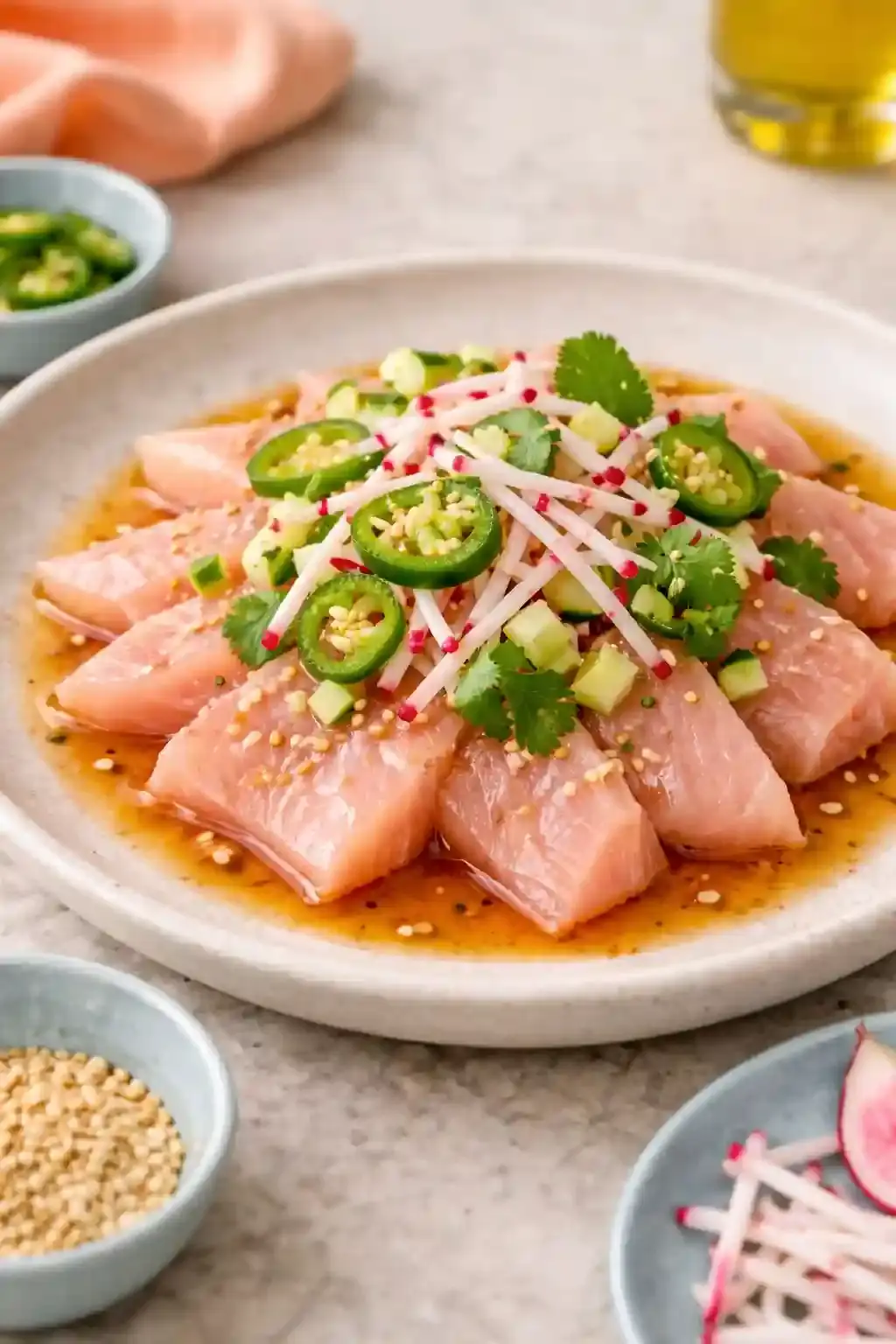
- Arrange the slices in a single layer rather than stacking them.
- Use garnish lightly so the plate stays clean and refined.
- Scatter the cucumber, radish, and serrano evenly for color and contrast.
- Add sesame seeds and cilantro at the end so they look fresh on the plate.
Common mistakes to avoid
- Slicing the fish too thick
- Adding too much dressing
- Letting the plated crudo sit too long
- Using so many toppings that the fish gets lost
Hamachi Crudo Recipe
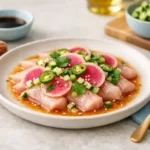
This hamachi crudo combines thinly sliced yellowtail with a light citrus-soy dressing, crisp vegetables, and gentle heat. It is a fresh, elegant appetizer that highlights the fish without overpowering it.
- Prep Time: 15 minutes
- Cook Time: 0 minutes
- Total Time: 15 minutes
- Yield: 2 servings 1x
- Category: Appetizer
- Method: No-cook
- Cuisine: Japanese
- Diet: Gluten Free
Ingredients
- 225 g sashimi-grade yellowtail, trimmed and chilled
- 2 tablespoons gluten-free ponzu sauce
- 1 tablespoon reduced-sodium tamari
- 2 tablespoons freshly squeezed lime juice
- 1 1/2 teaspoons mirin
- 1/2 to 3/4 teaspoon green yuzu kosho paste, depending on preference
- 1 teaspoon dark toasted sesame oil
- 1/4 of a small Persian cucumber, finely chopped
- 1/4 watermelon radish, cut into thin matchsticks
- 1/2 serrano chili, sliced very thin
- A handful of fresh cilantro leaves, optional
- Light sprinkle of sesame seeds
Instructions
- Place the hamachi in the freezer for about 10 minutes.
- In a small bowl, whisk together the ponzu, tamari, lime juice, mirin, yuzu kosho, and sesame oil until smooth.
- Use a very sharp knife to slice the hamachi into thin, even pieces.
- Arrange the slices in a single layer on a chilled serving plate.
- Scatter the cucumber, watermelon radish, and serrano over the fish.
- Drizzle the dressing lightly over the top just before serving.
- Finish with cilantro, if using, and a light sprinkle of sesame seeds, then serve immediately.
Notes
- Use sashimi-grade or sushi-grade hamachi from a trusted source.
- Keep the fish cold until you are ready to slice and serve it.
- Dress the fish just before serving so the texture stays delicate.
- Regular radish can replace watermelon radish if needed.
- Reduce or omit the yuzu kosho for a milder version.
Nutrition
- Serving Size: 1 serving
- Calories: 180 kcal
- Sugar: 1 g
- Sodium: 390 mg
- Fat: 8 g
- Saturated Fat: 1.5 g
- Unsaturated Fat: 6 g
- Trans Fat: 0 g
- Carbohydrates: 5 g
- Fiber: 1 g
- Protein: 18 g
- Cholesterol: 25 mg
FAQs
Hamachi has a mild, buttery flavor and a soft texture. In crudo, it tastes fresh, bright, and lightly seasoned.
Yes. Because the fish is served raw, use sashimi-grade or sushi-grade hamachi from a trusted source and keep it cold until serving.
Yes. You can leave it out for a milder version or replace it with a very small amount of thinly sliced chili.
Regular radish works well if sliced very thin. It gives a similar crisp texture with a different look.
You can prepare the dressing and garnishes ahead of time, but the fish should be sliced and dressed shortly before serving.
Related Recipes and Guides
If you enjoy light, fresh dishes, you may also like browsing more ideas in our low calorie recipes. For more dressing inspiration, see this homemade sauces guide. And if you want another bright, herb-forward option, take a look at this green goddess dressing recipe.
Final Thoughts
Hamachi crudo is a simple dish that depends on good ingredients, careful slicing, and light seasoning. When the fish is kept cold and the dressing is added just before serving, the result is fresh, balanced, and elegant without feeling complicated.
This version uses citrus, ponzu, sesame, and crisp garnishes to highlight the buttery texture of the hamachi rather than cover it. Served as a starter or part of a light meal, it offers a clean, refined way to enjoy raw fish at home.

